

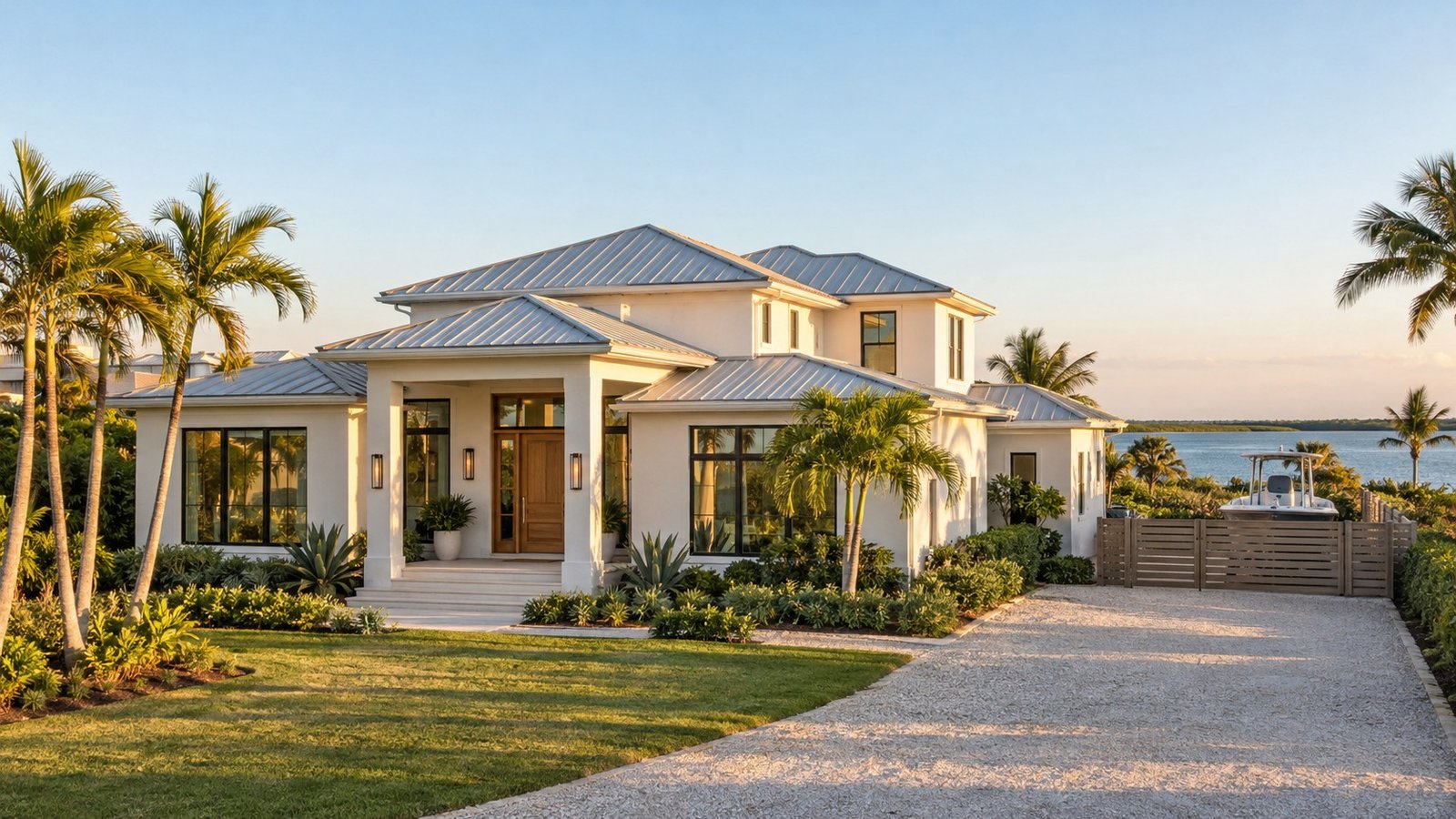
Should Merritt Island Buyers Prioritize a Wider Side Yard for Boat Storage or a Shorter Route to the Causeway?
By Carrie Liotta, Space Coast REALTOR® with REAL Broker | Published October 15, 2026
If you will truly keep a boat or trailer at home, a wider usable side yard can matter more than shaving a few minutes off a causeway route—but only after you prove the space works for that parcel. For everyone else, the shorter route is usually the benefit you will feel every weekday. On Merritt Island, I want buyers to test both before they let a listing photo decide the answer.
This is not a choice between a “boat house” and a “commuter house.” It is a choice between two kinds of convenience: a property feature that may remove storage hassle for years, and a route that can make the ordinary parts of life easier. The right answer depends on how often the boat moves, who drives where, whether the side yard is legal and practical to use, and how the whole property carries financially.
Start by deciding which inconvenience you are actually buying away
When I help a buyer compare Merritt Island homes, I ask a very plain question: what will annoy you more after closing? Some households use a boat every weekend, keep a trailer, need room to rinse gear, or do not want a monthly storage bill and the extra trip that comes with it. For them, an accessible side yard can be a daily-life feature, not a luxury.
Other buyers love the idea of boat storage but will use the boat a handful of times a year. If the real pattern is five workdays, school drop-offs, appointments, airport runs, and beachside or mainland errands, a cleaner causeway route may serve the household far more often. A home should support the life you have, not the version of your weekend that looks best in a listing description.
That is why I do not accept “room for a boat” as a conclusion. I want to know whether the boat is on a trailer, how it enters, where it turns, where the tow vehicle sits while it is being backed in, and whether the gate, fence, drainage swale, utility equipment, or easement changes the maneuver. I also want to know whether the household will be comfortable making that movement after dark or in the rain. A generous-looking strip of grass is not automatically functional storage.
When a wider side yard deserves real weight
A wider side yard deserves priority when it solves a documented, recurring storage problem. That can mean the parcel gives the buyer a straightforward route from curb to parking area, a gate and surface that work for the trailer, and enough clearance to use the space without improvising around the home. It also needs to fit the rules that apply to that specific address. Association restrictions, municipal or county requirements, recorded easements, setbacks, drainage features, and future improvements can all change the answer.
I would also look at the hidden carrying-cost side. Off-site storage, extra towing, and the time spent retrieving a boat can be meaningful for an active owner, but an at-home space can create its own costs: gate repairs, surface maintenance, landscaping changes, or a future buyer who prefers a more open side yard. There is no universal dollar figure that fits every Merritt Island street. The useful comparison is your actual storage arrangement today against the property-specific work the new space will require.
For a buyer who wants water access but is not committed to keeping a boat at home, it can help to compare that decision with a deeded marina slip versus canal frontage without a lift. The point is the same: do not pay for a boating identity until the access, equipment, and routine match the way you will really use the water.
Do the driveway test before you make an offer
The most valuable test is physical, not theoretical. Visit the finalist home with the type of tow vehicle and trailer you expect to use when possible. Measure gate width and the usable run of the side yard. Look for trees, meters, air-conditioning equipment, irrigation controls, low branches, curb geometry, and where the trailer would pivot. Ask the seller what is included and what has been permitted or approved; then verify rather than relying on a verbal answer.
At the same time, review parcel context. Brevard County’s GIS resources are a useful starting point for map and parcel orientation, but they are not a substitute for a survey, title work, association documents, or a professional opinion. If the home is within a municipality, confirm which jurisdiction holds the relevant records. A surprising number of storage assumptions fall apart because a buyer never checked the exact parcel conditions.
Water and drainage belong in the same conversation. A side yard that appears flat and open can carry water differently in a heavy storm, and the place where a trailer sits may affect access to a swale or maintenance area. The FEMA Flood Map Service Center is the official public source for flood-hazard information supporting the National Flood Insurance Program. FEMA also notes that map information can be updated, so use it to begin property-specific due diligence rather than treating an old listing label as the final word.
How to judge the causeway route honestly
A causeway route should be tested with the same discipline as the side yard. Do not let a map app’s quiet-hour estimate become the reason you reject a better home. Drive from the actual driveway to the places that set your schedule: work, school, a frequent medical appointment, the marina, the grocery store, and the airport or beachside destination that matters to your household. Do it at the time you would normally leave, then make the return trip.
Florida’s FL511 traveler-information service is a helpful official place to check current incidents and road conditions before a test drive. It is not a promise of a normal commute. Weather, bridge approaches, construction, an accident, a school schedule, a special event, and the final turns inside a neighborhood can all change how a route feels. I care less about winning a drive-time argument than finding the route a buyer will still tolerate on an ordinary Tuesday.
For some buyers, causeway access is a one-person question: one spouse crosses frequently while the other stays mostly on the island. For others, it is a household question because every activity pulls in a different direction. Write down the destinations and the weekly frequency. If the wider side yard saves an inconvenience twice a month while the route adds friction ten times a week, that arithmetic should be visible before you make an emotional choice.
My related guide to choosing between Barge Canal proximity and SR 528 access goes deeper on route-first decision-making. It is a useful companion here because a good storage setup does not erase a commute that fails your real schedule.
Rules, drainage, and documentation can change the value of the yard
I would never advise a buyer to count on outdoor boat or trailer storage until the governing documents and property details are reviewed. An HOA may have restrictions. A recorded easement may run where the trailer appears to fit. A fence or gate may have been added without the approvals a buyer expects. The side-yard surface may be attractive but unsuitable for repeated weight, or the route may interfere with drainage or a utility area. These are not reasons to avoid every storage-friendly property; they are reasons to turn the feature into a due-diligence item early.
Ask for the association documents, survey, seller disclosures, relevant permits or approvals, and any available correspondence about the gate, fence, or storage area. Brevard County’s permit-search resource can be a starting point for county records, but jurisdiction matters and older records can be incomplete. A missing search result is not proof that no approval was needed. When the feature is central to your purchase, involve the right local professional before the inspection period closes.
Insurance deserves a separate call. Do not assume that a wide yard, proximity to water, or an area that looks dry tells you what a policy will cost or require. Get property-specific insurance guidance and compare the flood-map context early. The best home for boat storage is not necessarily the best fit if the broader carrying cost makes your monthly plan uncomfortable.
Make the comparison on one page
For a buyer torn between two Merritt Island homes, I like a simple side-by-side sheet. Put the recurring route destinations on one side and the storage reality on the other. Then include the documents still needed rather than hiding unknowns behind a score.
- Storage: actual width, gate clearance, turning path, surface, drainage, restrictions, and whether the boat can be stored and retrieved without creating a weekly project.
- Route: the drive at your true departure time, bridge or causeway choices, school and errand patterns, and how the return trip feels after work.
- Carrying cost: off-site storage you can eliminate, property maintenance you may add, insurance quotes, association dues, and the overall payment.
- Resale: whether a future buyer will see the yard as flexible utility, a maintenance obligation, or simply unused space—and whether the location solves a broad enough daily-life problem.
That list keeps the decision honest. It does not turn either priority into a universal winner. A buyer who launches often may reasonably choose the bigger side yard. A buyer who values the boat but drives across the causeway every day may reasonably decide the route is the more valuable amenity.
My bottom line for Merritt Island buyers
Choose the wider side yard when it is proven usable, permitted or allowed as needed, and likely to remove a real storage burden from your week. Choose the shorter causeway route when the storage dream is vague but the drive is part of your life every day. In either case, do not buy on assumptions: test the trailer path, read the documents, review the parcel’s flood context, request insurance guidance, and drive the route on your own clock.
If you are comparing Merritt Island homes and want help sorting boat-storage practicality from a route that simply looks good on a map, I can help you build a property-specific decision list before you write an offer. Reach out for a no-pressure conversation about Brevard County homes for sale with Carrie Liotta at REAL Broker. Your next chapter starts here.
