

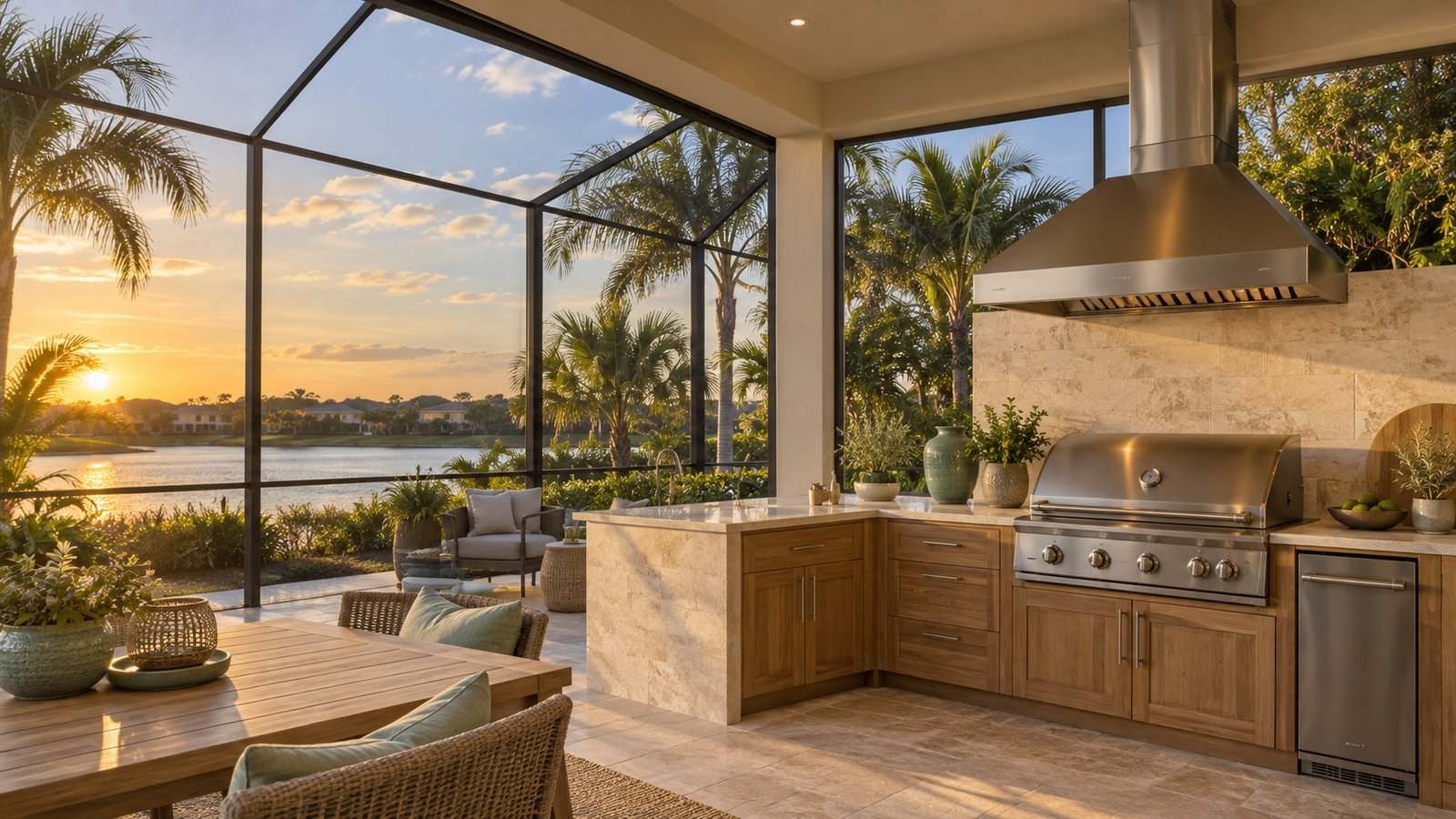
Outdoor-Kitchen Hood Exhausting Into a Screen Enclosure: What Should Viera Sellers Document?
By Carrie Liotta, Space Coast REALTOR® with REAL Broker | Published October 12, 2026
If your outdoor-kitchen hood appears to exhaust into a screened enclosure, document the entire air path before listing: appliance and hood models, installation instructions, duct route, final termination, permits and inspections, contractor records, cleaning history, and any later enclosure changes. Until a qualified professional verifies the setup, do not describe it as properly vented outdoors.
This is not a reason to panic or remove an outdoor kitchen before a buyer sees it. It is a reason to replace a vague feature story with evidence. A buyer should be able to understand what the hood serves, where cooking byproducts travel, whether the installed route matches the approved design, and what correction would be needed if it does not.
Start by naming the condition accurately
“The hood vents outside” can hide several different arrangements. The duct may terminate above the grill but below the screen-enclosure roof. It may pass through a wall into the lanai, continue through the enclosure roof, or stop at a decorative cover that is not connected to a complete duct. The fan may also be a recirculating unit that filters some grease and odors without sending air beyond the cooking area.
Before gathering paperwork, trace what is actually installed. Photograph the hood, filters, controls, model plate, visible duct, wall or roof penetration, and termination cap. Take one wide photograph showing the cooking equipment in relation to the house, enclosure, doors, windows, soffits, and ceiling. Do not remove panels, climb on the cage, or run smoky tests yourself. The purpose is to give the inspector and contractor a clear starting point, not to diagnose concealed construction.
I would also record the fuel and appliance type. A propane or natural-gas grill raises combustion and fuel-system questions that are different from an electric cooktop. Cooking with either fuel can create heat, moisture, grease, smoke, and odors, so the absence of a flame does not make the capture and duct route irrelevant.
Build a record that connects the hood, kitchen, and enclosure
An outdoor kitchen and a screen enclosure are often completed at different times. A later owner may add a grill, replace a hood, extend a gas line, enclose a previously open patio, or reroof the lanai. Each change can alter the original ventilation story.
Make a simple project timeline. For each phase, list the approximate date, contractor, permit number if any, final inspection, invoice, plan, warranty, and change in layout. Include the hood and appliance manuals, model and serial numbers, electrical or fuel paperwork, gas shutoff location, cleaning receipts, enclosure engineering or product documents, and HOA architectural approval when applicable. If a document is missing, label it missing rather than filling the gap from memory.
This is the focused version of the system I use in my guide to organizing a Viera pool enclosure, outdoor kitchen, and generator permit file. One property file is useful, but the hood still needs its own packet because a pool-cage final or patio invoice does not automatically establish how the cooking exhaust was designed.
Match the field condition to the installation instructions
The model-specific manual matters because hood designs are not interchangeable. It can identify whether the unit is listed for outdoor use, whether it is intended to recirculate or exhaust, acceptable duct material and size, required clearances, makeup-air considerations, weather protection, and where the manufacturer expects the discharge to terminate. The grill or cooktop manual may add separate hood, clearance, and enclosure requirements.
Ask a qualified mechanical contractor to compare those instructions with the installed condition. The useful deliverable is not “looks okay.” It is a written description of the duct from hood to termination, visible material and joints, penetrations, damper or cap, accessibility, grease condition, and any conflict with the equipment instructions or approved plans. If parts of the route are concealed, the report should say what could not be verified and what additional access or testing would be required.
The 2023 Florida Building Code, Residential chapter on exhaust systems is the current statewide starting point for domestic cooking exhaust. The Florida Building Commission says the Eighth Edition (2023) became effective December 31, 2023. That does not let a seller declare compliance from one web page. The applicable edition, work date, appliance listing, approved plans, property jurisdiction, and authority having jurisdiction all matter.
A screen enclosure is not a complete answer by itself
A screened lanai may feel open because air moves through it, but “screened” does not answer the mechanical question. The contractor still needs to identify where the hood discharges, whether heat and grease collect under a roof, how close the termination is to openings or combustible finishes, whether the cap is exposed to weather, and whether the enclosure changed after the hood was installed.
Pay attention to evidence of performance: grease film on the screen or ceiling, discoloration around a cap, corrosion, loose duct joints, damaged mesh, persistent odors, soot, heat damage, moisture staining, insects or debris at the outlet, or a fan that sounds powerful but moves little air. None of those observations proves the whole system is unsafe. They are reasons to have the system cleaned, traced, and evaluated rather than covering the stain before photography.
For gas cooking, ventilation deserves added care. The U.S. Environmental Protection Agency’s nitrogen-dioxide guidance identifies unvented combustion appliances and defective installations as indoor sources and recommends an exhaust fan vented outdoors over gas stoves, along with correct installation and maintenance. An outdoor kitchen is not identical to an indoor kitchen, but the guidance supports a practical seller rule: verify the route and appliance installation instead of assuming that screens alone resolve combustion and exhaust concerns.
Confirm jurisdiction and permit history without overpromising
Viera is not one blanket permitting or association file. Confirm the parcel and the authority that handled the work. When Brevard County is the jurisdiction, the Brevard County building permit search is an official starting point. Read the record carefully: an application, issued permit, inspection entry, and closed or final status are not the same thing.
Search the outdoor kitchen, mechanical work, gas or electrical work, and enclosure separately. Compare the permit descriptions and approved documents with what is visible today. A hood added after the original kitchen permit may not appear in the first project file. An enclosure reroof or repair could also have changed the termination even if the hood itself stayed in place.
A missing online record does not automatically prove unpermitted work, and a final inspection does not guarantee that no one altered the system later. Ask the building department and the appropriate licensed professional what records and review are needed for this exact address and scope. Keep HOA approval in a separate lane: an architectural letter can address community rules, but it does not replace governmental review or equipment instructions.
Choose the inspection team by the unresolved question
A general home inspector can document visible conditions and recommend specialists. A mechanical contractor can evaluate the hood, duct, airflow, and termination within that contractor’s scope. A licensed gas contractor may be needed for fuel piping, regulators, shutoffs, appliance conversion, or leak testing. An electrician may need to review the circuit, disconnect, bonding, receptacles, or weather exposure. The screen-enclosure contractor or engineer may need to address a penetration or attachment through the enclosure structure.
Give the team one shared question list so each proposal does not assume another trade handled the hard part:
- What appliance and hood models are installed, and are they approved for this location and use?
- Is the hood exhausting, recirculating, or partly disconnected?
- Where does the duct terminate relative to the enclosure roof, screens, doors, windows, soffits, and finishes?
- Does the installed route match the manuals, approved plans, and applicable requirements?
- Is cleaning, repair, rerouting, weather protection, or enclosure work recommended?
- Which trade performs each step, and what permits, inspections, or HOA review would apply?
If the outdoor kitchen uses propane, my comparison of an induction range and propane range for Viera relocators explains why fuel, electrical capacity, outage expectations, and ventilation should be evaluated as one installation rather than as separate selling points.
Price the correction as a coordinated scope
Do not assign a generic “new vent” allowance before the route is known. One home may need cleaning, a proper cap, and sealed joints. Another may require a new duct route through a roof or wall, removal and replacement of enclosure panels, electrical changes, gas work, permits, engineering, finish repair, and new weatherproofing. Access often determines as much of the cost as the visible hood.
Ask written proposals to separate diagnosis, mechanical work, fuel or electrical work, enclosure work, permit fees, engineering, finish restoration, and exclusions. If the correction passes through or near a structural enclosure member, do not let one trade cut first and ask questions later. The coordination lesson is similar to a pool-deck drain rerouted around a Viera screen-enclosure footer: the visible endpoint rarely tells the full construction sequence.
Then choose the listing strategy. A completed, documented correction may produce the cleanest handoff. A seller could instead disclose the verified condition and provide professional proposals, leaving the final work to the buyer when the contract, financing, insurance, and closing timeline support that choice. The weak approach is advertising “commercial-style outdoor ventilation” while the route remains unknown.
My pre-listing handoff for this Viera feature
- A one-page timeline for the outdoor kitchen, hood, fuel or electrical work, and enclosure.
- Hood and appliance manuals, model numbers, invoices, warranties, and service records.
- Permit details, approved plans available to the seller, inspection entries, and final-status evidence.
- HOA approvals kept separate from governmental permits.
- Wide and close photographs showing the duct path and final termination.
- A current contractor report stating what was verified, what was concealed, and what correction is recommended.
- Written proposals with each trade, permit, access, and restoration item identified.
- Accurate disclosure and listing language that match the evidence.
Bottom line
An outdoor-kitchen hood discharging into a Viera screen enclosure is not a feature to explain with one sentence. Document the equipment, duct, termination, project history, approvals, observed condition, and professional findings. If the route needs correction, define the whole scope before buyers price the uncertainty for you.
If you are preparing a Viera home with a complicated outdoor-living feature, reach out for a no-pressure conversation with Carrie Liotta, Space Coast REALTOR® with REAL Broker. I can help you organize the property file, the inspection questions, and the buyer handoff before the home reaches the market. Your next chapter starts here.
