

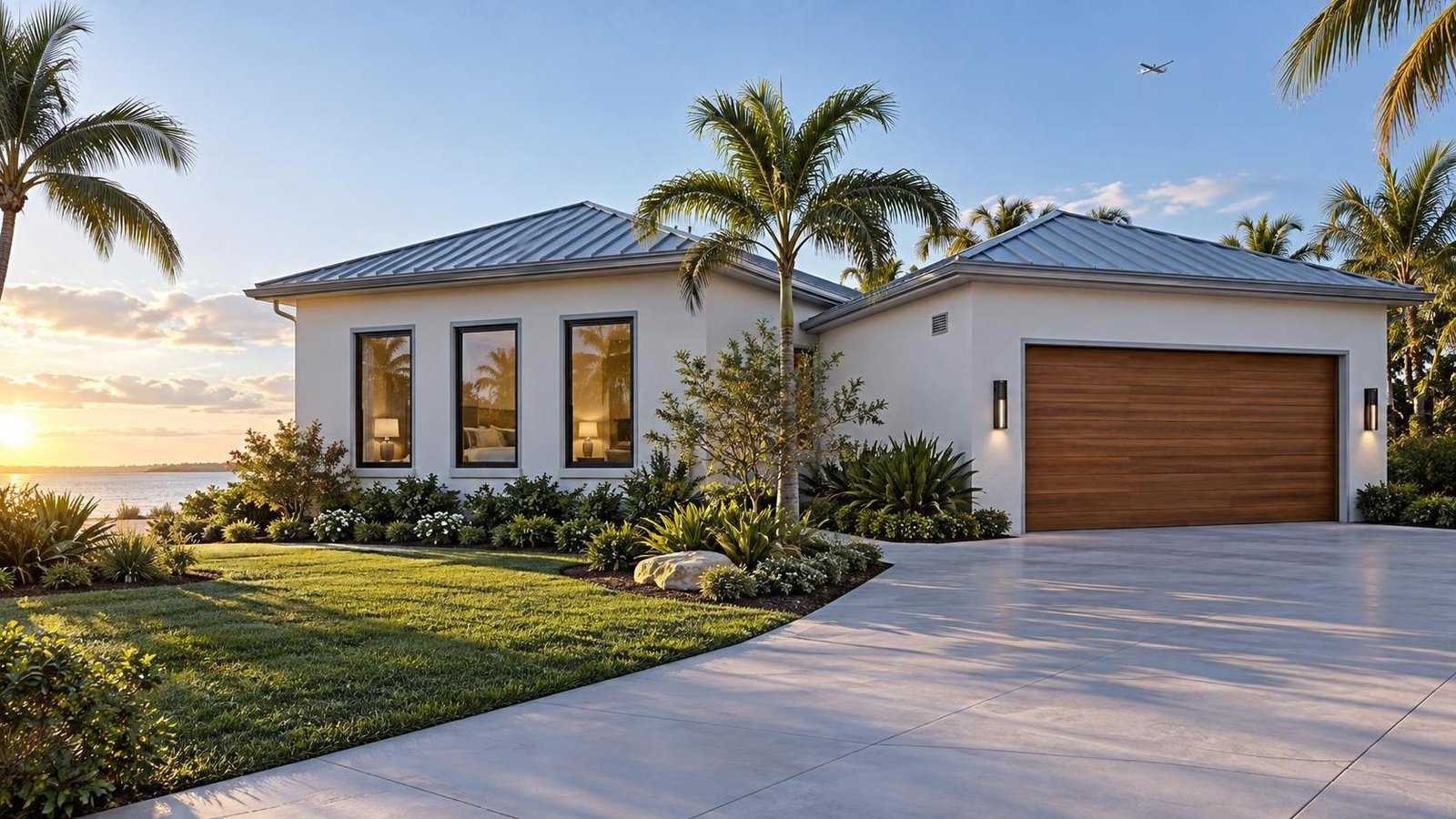
Garage Exhaust or Sound-Control Windows: What Should West Melbourne Relocators Prioritize?
By Carrie Liotta, Space Coast REALTOR® with REAL Broker | Published September 27, 2026
For most West Melbourne relocators near the airport and employer corridor, documented sound-control windows usually improve more hours of daily life than a garage exhaust system. I would reverse that answer for a household that regularly works, charges equipment, or produces heat and fumes in the garage. Verify installation, air sealing, ventilation, permits, and real noise conditions before paying a premium.
This is not simply “quiet house versus useful garage.” Windows affect bedrooms, calls, sleep, cooling, and the way outdoor sound enters the living space. Garage exhaust addresses a specific source and use pattern. Either upgrade can disappoint when the rest of the building is ignored: a quiet window cannot fix a loud roof vent or leaky door, and a powerful fan cannot correct unsafe storage or pull replacement air through the wrong place.
I compare the homes by routine, building envelope, system design, and location.
Define the garage job before valuing the fan
Ask what you will actually do in the garage. Parking hot vehicles for a few minutes is different from woodworking, exercising, charging tool batteries, maintaining equipment, running a refrigerator, or spending hours at a workbench. List the heat, moisture, odors, noise, and potential pollutants created by that routine.
Then identify the exhaust equipment: manufacturer, model, airflow rating, controller, intake path, duct route, exterior termination, backdraft protection, noise level, service access, and whether installation was permitted or professionally documented. Ask what prompted the project and whether any attached-room comfort or odor issue existed before or after it.
The U.S. EPA’s indoor air quality guide emphasizes source control and ventilation as different strategies and notes that signs such as stuffy air, condensation, or odors can point to ventilation concerns. The practical buyer lesson is to identify and reduce the source first, then have the ventilation design evaluated for the proposed use. A fan is not permission to store fuel, chemicals, or batteries carelessly.
Inspect the boundary between garage and house
For an attached garage, pay attention to the door into the home, weather stripping, wall and ceiling penetrations, attic connection, ductwork, return-air locations, recessed fixtures, and any room above or beside the garage. If the fan runs, ask where replacement air is expected to enter. You do not want a system that creates an unintended path from the garage or attic toward conditioned rooms.
ENERGY STAR’s air-sealing and insulation guidance recommends identifying the specific home problem before choosing a project. That same sequence belongs in the inspection period: diagnose leakage, insulation, duct, heat, and use patterns before assigning value to one device.
Review permits, invoices, electrician or mechanical contractor records, warranty, switch labeling, duct materials, exterior termination, and maintenance. The Brevard County permit search is a starting point when county jurisdiction applies; verify the property’s actual jurisdiction and final status.
My related article on garage ventilation versus work-truck charging explains why electrical capacity and ventilation must be reviewed together when equipment comes home from work.
Sound-control windows require more than thick glass
Ask for the window permits, final inspection, product information, installer, warranty, installation date, and exact openings replaced. Confirm whether exterior doors, sliders, garage door, attic vents, and remaining windows are older. Sound follows the weakest parts of the envelope, so a few premium windows may not create a uniformly quiet home.
Stand in the likely bedrooms and office with the HVAC cycling. Listen for aircraft, road traffic, landscaping equipment, pool pumps, dogs, garage doors, and sound traveling between rooms. Open and close each window. A quiet closed room may still feel warm, dark, or disconnected if the buyer expects frequent natural ventilation.
Do not infer performance from brand language alone. Installation quality, seals, frame, wall construction, roof and vent paths, room orientation, and distance from the sound source all matter. If quiet sleep or technical work is essential, consult a qualified window, building-envelope, or acoustical professional for property-specific advice.
Airport noise is not one fixed schedule
The Federal Aviation Administration’s noise portal explains that aviation-noise analysis is technical and complex. The FAA also notes that flight times, operation counts, and aircraft types involve private industry, while runway alignment reflects prevailing winds. That is why one silent showing cannot establish a normal day, and one loud pass cannot establish every day.
Visit more than once: a weekday morning, evening, and a period that overlaps your sleep or work schedule. Stay long enough to hear the neighborhood between events. Note aircraft direction, road traffic, school or daycare movement, nearby mechanical equipment, and indoor conditions with windows closed and open.
Use a phone log for time and observations, not as a substitute for professional sound testing. Compare the exact rooms you will use. A front office may experience road noise while a rear bedroom is quiet, or the reverse may occur depending on orientation and surrounding structures.
For a broader daily-life test, see my guide to airport noise, daycare pickup, and night-shift sleep in West Melbourne. The best address is the one that works during your hardest hour, not merely the easiest showing.
Compare comfort with energy and maintenance
Sound-control windows may reduce drafts and change solar heat gain depending on the complete product and installation, but do not promise a specific utility saving without evidence. Compare the window specifications, orientation, shades, attic insulation, ducts, HVAC age, and actual room temperatures. A west-facing bedroom can be quiet and still uncomfortable if heat control is weak.
The garage fan adds electricity use, controls, cleaning, possible filter or shutter maintenance, and another exterior penetration. It may also create audible vibration or neighbor-facing noise if poorly mounted. Operate it during inspection and listen inside adjacent rooms and outdoors.
Ask for utility history only as context. Household size, thermostat settings, EV charging, workshop use, pool equipment, and remote-work schedules make one owner’s bills a poor forecast for another. The relevant question is whether the home’s systems are coherent and maintained.
Which feature is harder to add later?
Price both paths. Replacing multiple windows can be expensive and disruptive, and HOA or architectural approval may apply. Adding a garage exhaust system may require electrical, duct, wall or roof penetration, makeup-air, fire-separation, noise, and permit review. The smaller project is not automatically the simpler project.
If only a bedroom and office need quieter openings, a targeted window plan may be feasible after closing. If the garage layout makes a safe exhaust route difficult, an existing documented system may be unusually valuable. Conversely, if the fan is poorly located and the house still leaks garage odors, assign it little or negative value until the problem is understood.
Compare these costs with the home’s location advantage. A slightly longer drive in a consistently quieter home may be worth more to a night-shift household. My article on airport-corridor noise versus a shorter commute provides a route-and-room worksheet for that tradeoff.
My inspection-period plan
- List the exact garage activities, equipment, storage, charging, and time spent there.
- Inspect the garage-house air boundary, fan design, electrical work, duct route, termination, controls, and documentation.
- Identify every upgraded window and every remaining sound path.
- Test bedrooms, office, patio, and garage on multiple visits during relevant hours.
- Review product approvals, permits, finals, invoices, warranties, and transferable accounts.
- Have qualified professionals evaluate unresolved ventilation, electrical, envelope, or acoustical questions.
- Estimate the real cost to add the missing feature after closing.
- Choose only after the commute, sleep, work, and maintenance routines fit together.
Who should prioritize the sound-control windows?
Choose the documented window package when quiet sleep, remote calls, study, or indoor calm matters every day; the important rooms benefit; and the rest of the envelope does not undermine it. This often fits night-shift households, remote professionals, families with early bedtimes, and buyers who rarely use the garage as a workspace.
The strongest home has more than quiet windows. It has reasonable room orientation, sealed openings, maintained HVAC and ducts, appropriate shades, and a location you have tested. Do not pay a large premium for windows that improve only a room you will not use.
Who should prioritize the garage exhaust?
Choose the documented exhaust system when your routine creates a legitimate garage heat, moisture, or air-quality load; the design has been professionally evaluated; the installation is serviceable; and the boundary to the home is sound. It can be valuable for a workshop or equipment-heavy household, but only when it supports a safe use plan.
If your garage need is occasional and the competing house is meaningfully quieter where you sleep, I would usually choose the windows and plan a modest garage solution after a professional review.
Bottom line
Sound-control windows usually serve more hours of a West Melbourne relocator’s week, while a garage exhaust system serves a narrower but sometimes critical routine. The better home is the one whose upgrade solves your real problem without hiding weak installation, air leakage, unsafe use, or an untested location.
I help relocating buyers test the house around the workday they will actually live—commute, shift sleep, garage use, insurance, and resale included. Reach out for a no-pressure conversation about Brevard County homes for sale, or join my private Facebook group, Moving to Brevard County Florida. Your next chapter starts here.
