

Whole-House Surge Protection or a Larger Outdoor Kitchen: What Should a Viera Buyer Value More?
By Carrie Liotta, Space Coast REALTOR® with REAL Broker | Published September 25, 2026 on 321 Coastal Living
If two Viera homes have similar payments and assessments, I would choose the documented whole-house surge protector when the household depends on sensitive electronics, remote work, EV charging, or smart-home systems. I would choose the larger outdoor kitchen only when its permits, utilities, condition, and everyday usefulness are equally clear. The best answer is not which feature photographs better; it is which one reduces your next likely expense.
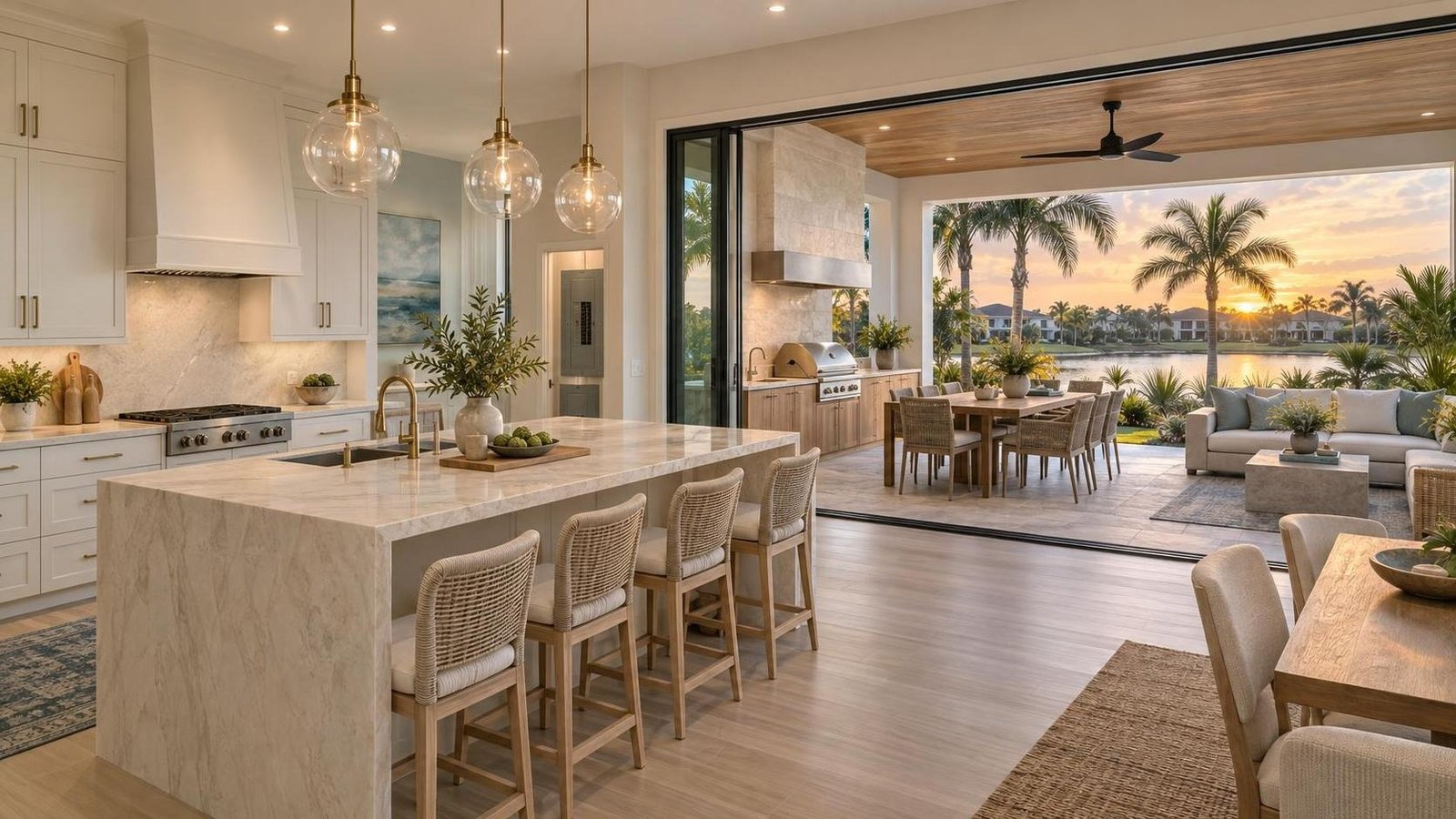
This comparison comes up because Viera homes can package value very differently. One house may have a polished lanai with a grill, sink, refrigerator, and generous counter. Another may look simpler outside but have a professionally installed surge protective device, labeled circuits, newer panel work, and a clean permit file. Buyers often treat the first as an amenity and the second as a small line item. I slow the decision down, because both can involve meaningful infrastructure.
Start by separating protection from entertainment
A whole-house surge protector and an outdoor kitchen do not solve the same problem. Surge protection is part of the home’s electrical-risk strategy. It is intended to help manage transient voltage events before they reach connected equipment. An outdoor kitchen expands how you use the home, especially in a Viera floor plan where the kitchen, great room, lanai, and pool are designed as one living area.
That means there is no honest universal winner. A remote-working household with multiple computers, network equipment, smart pool controls, connected appliances, and an EV charger may place real value on documented electrical work. A buyer who hosts family every weekend and expects to cook outside several nights a week may receive more daily value from a well-built outdoor kitchen. The decision becomes clearer when you compare documentation, replacement exposure, and actual routine rather than two feature labels.
What “documented whole-house surge protection” should mean
I do not give extra value merely because a seller says the house has surge protection. I want to know what was installed, where it is installed, who installed it, and whether a licensed electrician can identify it. Ask for the invoice, model information, installation date, warranty terms, and any applicable electrical permit or final inspection. Look for clear labeling at the service equipment or panel, but do not remove a panel cover or try to evaluate wiring yourself.
The National Fire Protection Association’s National Electrical Code resources are a useful reminder that electrical requirements depend on the adopted code and local enforcement. Florida’s current statewide building-code framework is the Florida Building Code, 8th Edition (2023), which became effective December 31, 2023. That does not prove a particular Viera device is compliant or correctly installed. The parcel file, installation records, and a licensed electrician’s review are what connect the general standard to the home.
I also ask whether the electrical system has changed since the device was installed. Was an EV outlet added? Did solar, battery storage, a generator inlet, pool equipment, or a new subpanel come later? A surge protector is not a substitute for correct grounding, bonding, overcurrent protection, or safe workmanship. It is one component in a larger system. A buyer should not let the phrase “whole-house” create a false sense that every electrical risk has been addressed.
This is similar to the documentation problem I discuss in my guide to Viera garage racks, EV outlets, and attic access: several individually useful features can create one crowded or altered system, and the records matter as much as the marketing.
A larger outdoor kitchen can hide more questions than buyers expect
A beautiful outdoor kitchen deserves a close look because “larger” may mean more gas, electric, plumbing, drainage, refrigeration, countertop weight, roof coverage, and weather exposure. I want to know whether the installation was original to the home or added later, whether the HOA approved visible changes, and whether county records align with the improvements that required review.
For unincorporated Viera addresses, the Brevard County building-permit search is a practical starting point. A search result is not a complete inspection, and missing online history does not automatically prove unpermitted work. It tells us what to ask next: invoices, contractor details, final inspections, HOA architectural approvals, appliance manuals, gas-line records, and repairs.
Condition matters too. Open every cabinet. Look for swollen panels, corrosion, pest entry, deteriorated sealant, leaking supply lines, damaged receptacle covers, grease accumulation, and drainage that sends water toward the house. Confirm that the refrigerator cools and the sink drains, but do not treat a quick showing test as a specialist inspection. Pool-area and outdoor electrical components deserve professional attention because sun, moisture, irrigation, and Florida weather work on them continuously.
A large counter is only valuable if the layout works. Can the cook move safely when people are using the pool? Does smoke drift toward the lanai doors or a neighbor’s patio? Is there shade during the hours you would use it? Can appliances be serviced without dismantling masonry? An impressive outdoor kitchen that is too hot, awkward, or expensive to repair can become a decorative object rather than useful living space.
Compare the next five years, not just today’s list price
When two homes have similar district assessments, HOA obligations, and mortgage estimates, I build a simple five-year ownership list for each one. I do not pretend to know exact future costs. I identify what could reasonably need attention and which records reduce uncertainty.
For the home with surge protection, that list may include electrician review, replacement guidance from the device manufacturer, panel capacity for future equipment, and separate plug-in protection for valuable electronics. For the outdoor-kitchen home, it may include appliance replacement, cabinet or counter repair, plumbing service, gas inspection, weatherproof covers, ventilation, and eventual redesign if the layout does not fit the buyer’s routine.
This is where visible square footage can distort judgment. A larger outdoor kitchen may have cost more to build, but construction cost is not automatically resale value. A documented electrical upgrade may cost less yet be more important to a particular household. I advise buyers to assign personal-use value, not the seller’s presumed investment. If you would cook outside twice a year, do not pay as though the space will transform your life. If you work online every day and the home runs on connected controls, do not dismiss electrical documentation because it is hidden in the garage.
Which Viera buyer should favor surge protection?
I lean toward the house with the stronger electrical file for buyers whose income or daily routine depends on reliable equipment. That includes two-person remote-work households, serious home-office users, buyers with extensive networking or audiovisual equipment, and owners planning EV charging, solar, batteries, or sophisticated pool controls. I also favor it when the competing outdoor kitchen has vague permit history, aging appliances, moisture damage, or a design the buyer would soon change.
The surge-protection home becomes less compelling if the device is unidentified, improperly represented, unsupported by records, or sitting beside questionable panel work. In that case, the feature is not a verified advantage yet. The right response is not panic; it is an electrician’s evaluation and a written estimate during the inspection period.
Buyers sometimes assume electrical protection will create an insurance credit. I would not price the home or write an offer around that assumption. Ask your insurer which documented features matter for the specific policy. If storm-related insurance value is a priority, compare the home’s complete wind-mitigation picture. My recent explanation of impact windows versus a newer garage door shows why one isolated improvement rarely tells the whole insurance story.
Which buyer should favor the outdoor kitchen?
The larger outdoor kitchen can be the better choice when the space genuinely replaces indoor cooking and entertaining functions, the construction file is clean, the equipment has been maintained, and the layout fits the household. It is especially persuasive when the lanai has usable shade, the cooking area is safely separated from circulation, storage stays dry, and the utilities are accessible for service.
I would also give it more weight when the other home’s electrical advantage could be added later without major reconfiguration, subject to a licensed electrician’s evaluation, while recreating the outdoor space would require structural, utility, and HOA work. That is a property-specific judgment. Buyers should get real estimates instead of assuming one upgrade is easy.
Do not overlook neighborhood rules. Outdoor kitchens, roof extensions, gas lines, screens, drainage changes, and equipment locations may involve different approvals. A prior approval does not promise that your future expansion will be allowed. Review the current governing documents and the property file. Sellers can make this easier by following the same records-first approach I recommend for Viera courtyard, pool-screen, and drainage changes.
My offer-stage checklist for these two homes
- Request parallel files. Ask for electrical invoices, labels, permits, and warranty information from one seller; ask for outdoor-kitchen plans, permits, HOA approvals, contractor invoices, appliance details, and repair history from the other.
- Inspect both systems. Use a licensed electrician for the electrical questions and qualified trades for gas, plumbing, appliance, and exterior-condition concerns.
- Confirm what conveys. Determine whether specialty appliances, mounted equipment, televisions, grills, refrigerators, and smart controls remain with the property.
- Check the entire ownership stack. Compare roof, HVAC, insurance quotes, HOA obligations, district assessments, taxes, and near-term maintenance. Do not let either feature distract from a larger weakness.
- Price uncertainty. If records are missing, obtain estimates and decide whether the offer should reflect the risk, whether the seller should provide documentation, or whether another home is cleaner.
- Test your actual routine. Visit at the time you expect to work or entertain. Notice glare, heat, shade, noise, traffic through the lanai, and the distance between indoor and outdoor storage.
Do not let similar assessments imply similar value
Two Viera homes can carry similar annual assessments and still present very different ownership decisions. Assessments tell you about one part of the carrying cost. They do not tell you whether the electrical system is well documented, whether outdoor improvements were approved, whether appliances are near replacement, or whether the space fits your life.
I tell buyers to make the offer only after they can finish this sentence: “I am choosing this home because I will use its advantage, and I understand the remaining risk.” That is a stronger reason than choosing the prettier listing photo or treating an equipment label as proof of comprehensive protection.
Bottom line
Choose the documented whole-house surge protector when electrical reliability supports your work, equipment, and future plans, especially if the competing outdoor kitchen is poorly documented or lightly used. Choose the larger outdoor kitchen when it is approved, maintained, serviceable, and central to how you will live. In either case, verify the records and inspect the infrastructure before assigning a premium.
If you are comparing Viera homes with very different upgrade packages, I can help you organize the decision around monthly cost, documentation, inspection risk, and everyday use. Reach out for a no-pressure conversation about Brevard County homes for sale with Carrie Liotta, Space Coast REALTOR® with REAL Broker. Your next chapter starts here.