

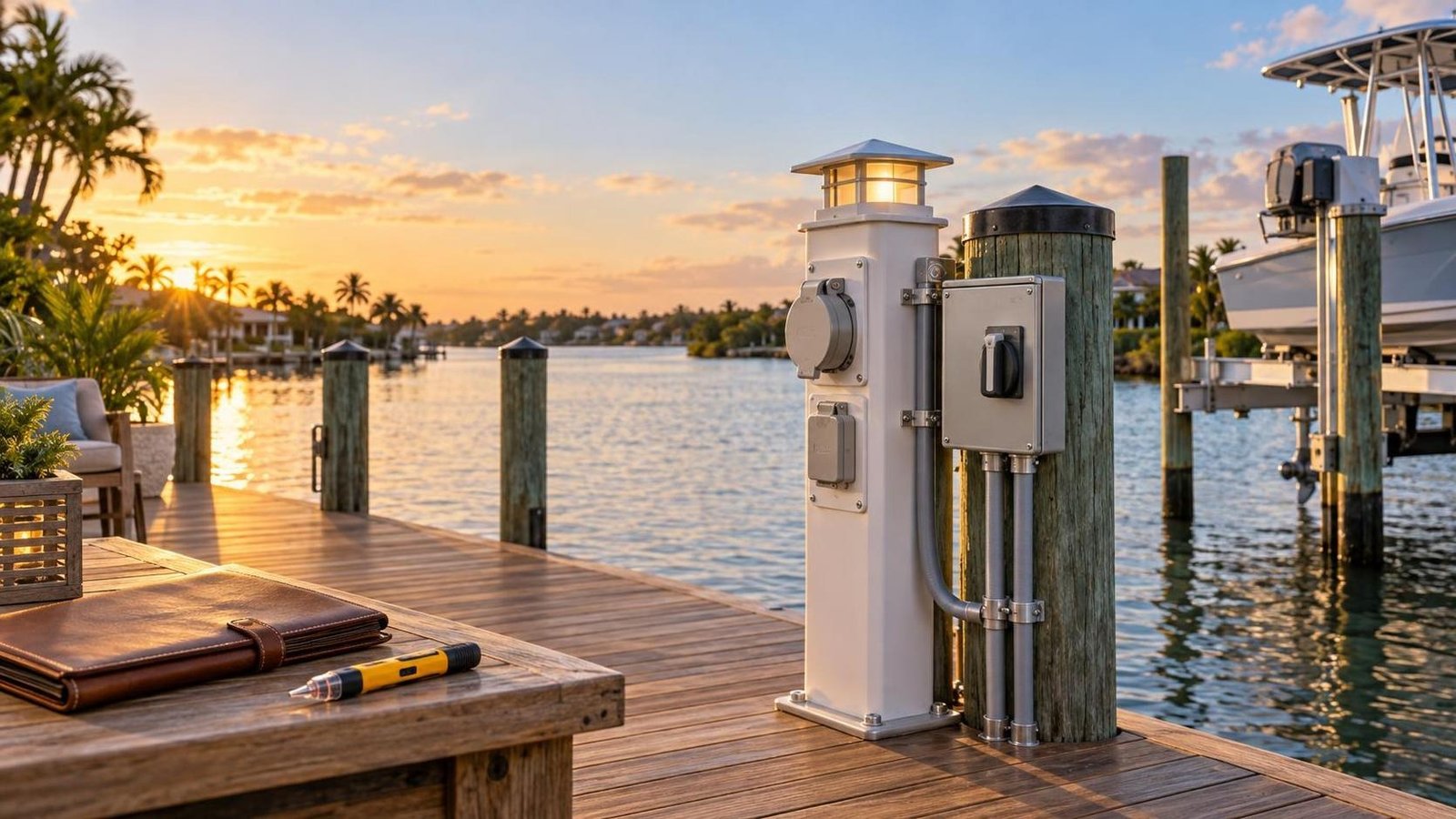
Unpermitted Dock Electrical in Merritt Island: Should a Seller Correct It or Provide an Estimate?
By Carrie Liotta, Space Coast REALTOR® with REAL Broker | Published September 24, 2026 on 321 Coastal Living
If a licensed electrician confirms that Merritt Island dock electrical work lacks required permits or has safety defects, I would usually correct and document it before listing rather than offer only an estimate. An estimate can be reasonable when the scope or approval path is still uncertain, but the system should be de-energized or managed as the electrician directs and disclosed accurately.
Water and electrical uncertainty are a poor combination for a sale. Buyers may worry about personal safety, insurance, lender requirements, permit closeout, and whether the dock or lift can be used on day one. If the seller waits until inspection, a contained project can turn into a broad trust problem.
The first step is not automatically hiring someone to replace everything. It is establishing what exists, what records can be found, whether the installation was permitted as required at the time, and what a properly licensed professional recommends now.
Do not label the work “unpermitted” from an incomplete online search
Start with the property address, known contractor name, approximate work date, invoices, panel labels, and prior owner records. Search the Brevard County building permit records when the home is in the county’s jurisdiction. If another authority handled the work, use that authority’s records. Older permits, address variations, and separate electrical subpermits can make the first result incomplete.
Compare the record with the physical system. A permit for dock replacement may not describe later lift power, lighting, receptacles, a shore-power connection, or a generator-fed circuit. An electrical permit may exist under a broader project number. Ask the permitting office or contractor how to confirm final status rather than treating “no result on my screen” as a legal conclusion.
If no supporting record can be located, say exactly that: no permit record has been found for the observed work as of the search date. Then ask a licensed electrician and the authority having jurisdiction what review or corrective path applies. The seller should not advertise the work as permitted, code-compliant, or grandfathered without support.
Bring in the right licensed electrician early
Dock power is not a handyman project. Hire an electrician qualified for the scope and familiar with waterfront installations. Florida’s Department of Business and Professional Regulation provides official tools to verify licenses and find licensed-contractor resources. Confirm the license directly and retain the written scope, photos, invoice, and permit information.
Ask the electrician to evaluate the entire path, not just the visible outlet. That may include the service or panel source, breaker and protective devices, wiring method, conduit, junctions, grounding and bonding, disconnects, dock receptacles, lighting, lift motor and controls, corrosion, physical damage, and any interaction with generator equipment. The exact inspection should follow the professional’s judgment and current requirements for the installation.
If the electrician identifies an immediate hazard, follow the safety direction rather than keeping power available for showings. Never invite a buyer to “test” questionable dock equipment. The National Fire Protection Association’s electric-shock-drowning resource underscores why electrical hazards in or near water deserve professional attention, not casual reassurance.
When correction before listing is the stronger choice
I favor correction when the scope is clear, the work can be permitted and inspected through an established process, the system is important to the property’s waterfront use, and the seller can complete it without jeopardizing timing. A properly documented repair removes a large unknown from the buyer’s inspection and insurance review.
Correction is especially useful when dock lighting, a lift, outlets, or water service are central to the listing’s value. If marketing shows a boat lift in operation, buyers reasonably expect the supporting electrical system to have a coherent story. A new disconnect, repaired conduit, or replaced panel should come with more than fresh hardware: preserve the proposal, permit, inspection result, paid invoice, contractor license information, warranties, and operating instructions.
Do not limit the project to what is easiest to photograph. If the electrician says the defect begins at the house panel or the circuit path is unsuitable, replacing only the dock outlet may create a misleading impression. Let the professional define the complete scope.
After completion, verify that the final record is actually posted or otherwise documented. “The electrician handled it” is not enough when the buyer requests proof during a short contingency period.
When a licensed estimate may be more practical
An estimate can be reasonable when the permit authority must first determine the approval path, when engineering or dock access is needed, when replacement will interact with a larger dock or seawall project, or when the closing schedule does not allow responsible completion. It can also make sense when the buyer intends to redesign the dock and would otherwise remove newly installed work.
The estimate should be detailed. It should identify observed conditions, proposed correction, exclusions, permit assumptions, access requirements, equipment included, and whether the system should remain off pending repair. If more than one trade may be needed, include those dependencies rather than presenting a narrow electrical number as a complete waterfront solution.
An estimate is not a certification. It does not make the current installation safe, permitted, insurable, or acceptable to the buyer’s lender. It gives the parties a documented basis for pricing and negotiation. The buyer may still request a second opinion or decline the risk.
If the seller chooses this route, marketing should not promise operational dock power. Describe only what can be supported, disclose the known issue through the appropriate documents, and make the estimate available in a controlled, factual way.
Understand the waterfront-permit overlap
Electrical work can be only one layer of a waterfront project. A lift, dock, seawall, or shoreline change may involve local and environmental review in addition to electrical permitting. Brevard County’s waterfront-development information is a useful official starting point for local questions, but the seller should have the contractor identify every relevant authority for the actual property and scope.
For example, correcting a dock circuit may be straightforward if all structures are documented. It becomes more complicated if the equipment is mounted to an altered dock section with uncertain records, if conduit crosses an area planned for seawall repair, or if the lift itself was changed. Do not assume an electrical permit cures unrelated structural or environmental questions.
Organize the file by system: dock structure, lift, electrical, seawall, plumbing or water service, and generator connection if present. That lets the buyer see what has been verified and prevents one permit number from being used as proof for everything outside.
How buyers are likely to price the uncertainty
A buyer does not see only the electrician’s invoice. The buyer considers the possibility of permit delay, hidden upstream defects, unusable lift time, insurance questions, contractor availability, and access disruption. If the seller supplies only a verbal estimate, the buyer may reserve far more than the eventual work costs.
Completed, inspected work usually produces the clearest value story. A detailed licensed estimate is second best when completion is impractical. An unexplained switch or extension cord with no records produces the largest discount because the buyer has to define both the problem and the solution.
Price should reflect the whole home. If the seawall, roof, and HVAC are also near-term projects, one more unresolved system may overwhelm a buyer’s reserve. In that situation, correcting dock power can preserve the usability story even if the seller does not renovate other items.
My guide to Merritt Island dock electrical, generator, and lift-shutoff records explains how buyers connect separately installed systems and why dates, contractors, and labels should match.
What to place in the listing file
A strong seller file includes:
- The permit search and any located permits or final inspections.
- The electrician’s license verification and written evaluation.
- Photographs of the pre-repair condition when relevant.
- The approved scope, permit, inspection, paid invoice, and warranty for completed work.
- Lift or dock service records that identify connected equipment.
- A clear diagram or label identifying normal and emergency shutoffs.
- A factual note about any remaining limitation or work not included.
Keep account credentials, gate codes, and sensitive personal information out of the general buyer packet. Transfer operating manuals and appropriate access information through a secure closing process.
If other waterfront components also deserve review, a pre-listing seawall inspection may help define condition before buyers combine every waterfront question into one large concession.
A practical decision tree for sellers
First, search records and hire the electrician. Second, determine whether the system should remain energized. Third, confirm the permitting and correction path. If the scope is clear and timing is realistic, complete and close the work before launch. If the path depends on engineering, structural work, or a longer public review, obtain a detailed estimate, disclose accurately, and price with the uncertainty in mind.
If the correction is modest but the seller refuses to address it, buyers may wonder what else has been deferred. If the correction is complex, pretending it is modest creates a worse negotiation later. The most credible strategy is the one that matches the professional documentation.
Do not allow listing photography or staging to conceal the condition. Do not call the dock “turnkey” while the electrical system is off or under review. And do not promise that a buyer can complete the work immediately after closing without verified guidance.
My bottom line
A licensed estimate is useful evidence, but it is not equal to a completed, permitted, inspected correction. For most contained dock-electrical issues, doing the work before listing creates a safer and cleaner sale. For genuinely uncertain or interconnected projects, a detailed estimate and transparent pricing can be the more honest route.
Merritt Island buyers are not afraid of waterfront maintenance when they can understand it. They become cautious when the listing celebrates a dock and lift but no one can explain how the power reached them.
If you are preparing a Merritt Island canal home for sale, I can help you organize the records, identify which professional questions should be answered before photography, and build a pricing strategy around facts rather than assumptions. Reach out for a no-pressure conversation with Carrie Liotta, Space Coast REALTOR® with REAL Broker. Your next chapter starts here.
