

Grant-Valkaria Acreage or a Smaller Home Near Melbourne: What Should Relocators Choose?
By Carrie Liotta, Space Coast REALTOR® with REAL Broker | Published September 20, 2026
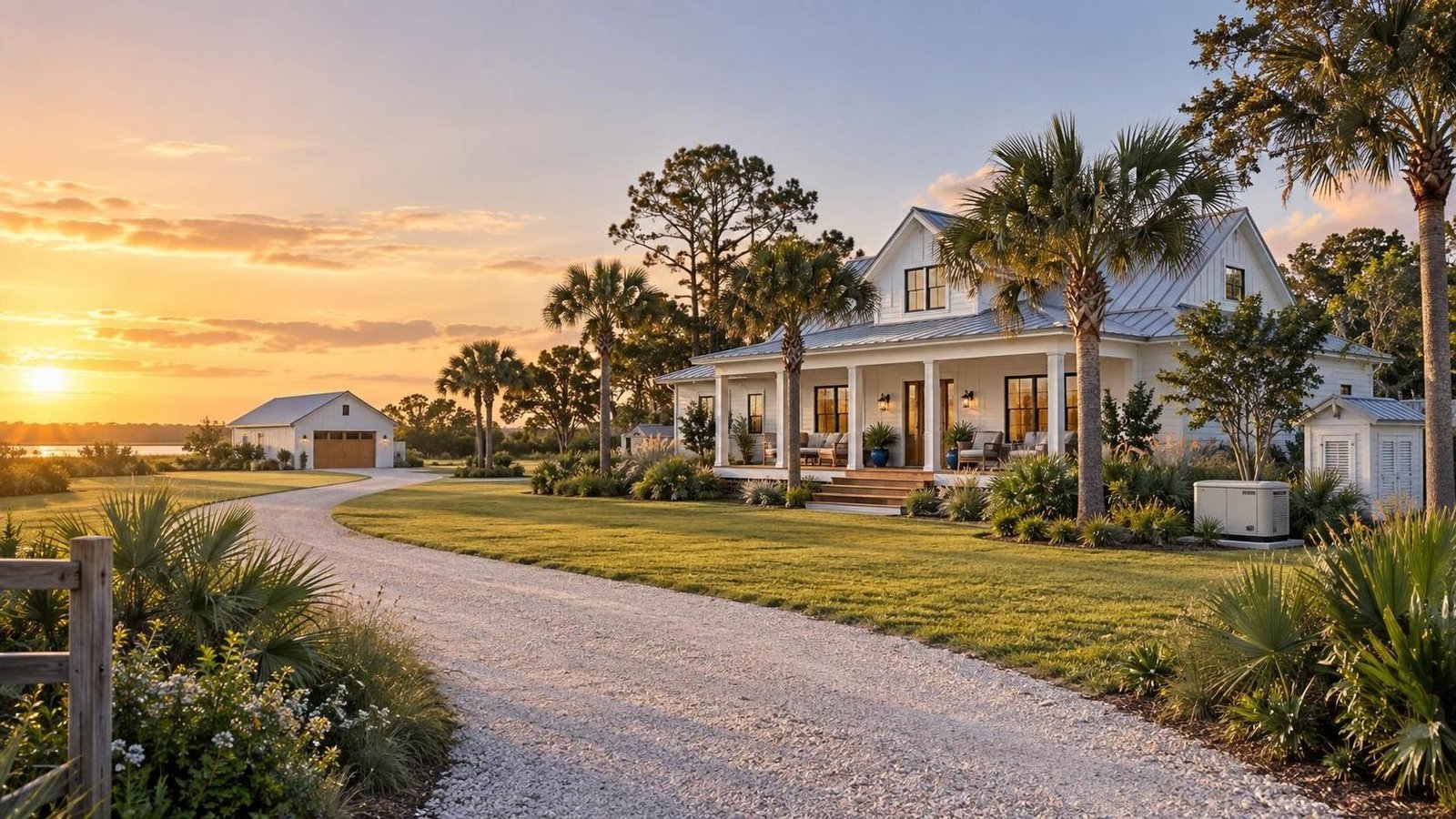
Choose the generator-backed Grant-Valkaria acreage home when you will actively use the land and can maintain the well, septic, drainage, access, and backup-power systems. Choose the smaller public-utility home closer to Melbourne when commute predictability, easier service, and lower property workload matter more than privacy. Compare the complete week and five-year reserve plan.
Relocators often frame this choice as freedom versus convenience. The acreage property offers space for hobbies, trailers, gardens, animals where allowed, workshops, and distance from neighbors. The closer home offers a shorter route, public water and sewer, simpler grounds, and a resale story more buyers understand quickly.
I would not let a shiny standby generator make the acreage self-sufficient on paper, and I would not let a small lot make the utility home automatically easy. Each solves a different daily problem.
Decide whether you need land or simply like looking at it
List the uses that require acreage: horses or other allowed animals, a permitted workshop, RV or boat storage, gardening, privacy, multigenerational plans, business equipment permitted by zoning, or room between structures. Then confirm each intended use through zoning, covenants, road access, insurance, and site conditions.
If the list is mostly “quiet” and “more space someday,” calculate the maintenance. Mowing, fencing, gates, trees, drainage, pest control, driveway upkeep, outbuildings, wells, septic, irrigation, and generators all require time or hired help. A beautiful property can become a second job for a household working long Melbourne schedules.
A smaller public-utility home may still provide a screened patio, garage storage, nearby parks, and enough yard for everyday use. The right question is not how much land you can buy. It is how much land you will maintain with energy left for the lifestyle that brought you to Brevard.
Test the Melbourne commute at your real hours
Grant-Valkaria is south of the central Melbourne employment corridor, and the experience varies by the exact property, worksite, shift, school route, and preferred road. Use the actual employer entrance—not a city-center pin. Drive both routes on a weekday at departure and return times, then test a backup route.
Note road surface, two-lane segments, school zones, railroad crossings, dark stretches, wildlife, standing water after rain, difficult turns, fuel stops, and the final access to the acreage driveway. If one spouse works near the airport corridor and another has a hospital, Palm Bay, beachside, or Viera route, map both.
Do not publish or rely on one universal commute estimate. A route that feels peaceful at midday can be frustrating at shift change, and a closer home can still have a difficult left turn. My guide to West Melbourne airport-corridor noise versus commute convenience explains how to test the employment side of this comparison.
Understand the well before calling it independence
Ask for the well permit and construction information, pump age, pressure tank, treatment equipment, water-quality tests, service history, invoices, irrigation connections, and known issues. Identify which fixtures use well water and whether any system is shared. Have qualified professionals inspect the equipment and arrange appropriate water testing for the buyer’s intended use.
The generator’s value depends partly on whether it can power the well pump. Ask a licensed electrical or generator professional to confirm the served circuits, starting loads, transfer equipment, capacity, fuel, and operating sequence. “Whole-home” does not guarantee every large load can run simultaneously.
For the public-utility home, confirm service availability, meter status, connection, private service-line condition, billing, and any assessments or planned work. Public service shifts responsibility; it does not eliminate the need to inspect the pipes on the property.
Give the septic system its own due diligence
Request the septic permit, approved site plan, tank and drainfield locations, capacity, pump and inspection records, repairs, alarms if present, and replacement-area information. Compare those locations with pools, barns, workshops, trees, driveways, and additions. Open grass is not automatically available for future construction.
The Florida DEP onsite sewage program explains that proper design, construction, and maintenance protect groundwater and that county health departments continue property-specific permitting and inspection functions in most counties. In Brevard, verify records with the responsible local office and use a qualified septic professional for current condition.
A septic inspection cannot promise unlimited life, but it can identify accessible components, maintenance needs, and reasons for further evaluation. Price pumping, repairs, eventual replacement, and preservation of the replacement area in the acreage budget.
Verify what the generator can actually do
Gather the installation permit and final, model, capacity, fuel source, tank or service details, transfer switch, load-management plan, served circuits, warranty, battery history, maintenance records, and most recent test report. Inspect placement, drainage, vegetation, fencing, clearances, and service access.
Ready.gov’s outage guidance recommends inventorying electricity-dependent needs and operating generators outdoors away from windows, doors, and attached garages. For acreage, the critical list may include the well pump, refrigeration, septic components, gates, medical devices, communications, and enough cooling.
Backup power does not restore an outside internet outage, refill fuel automatically, clear a blocked road, or repair a failed well pump. Ask about internet providers, cellular reception, equipment battery backup, and alternative work locations. A public-utility home closer to Melbourne may have a simpler recovery plan even without a permanent generator.
Inspect access, drainage, and outbuildings
Acreage value depends on usable access. Review the survey, legal access, road maintenance, culverts, gates, driveway base, turnarounds, trailer clearance, easements, and shared obligations. Visit after rain. Look for ruts, standing water, erosion, soft shoulders, blocked ditches, and runoff near structures.
Inspect every barn, shed, workshop, carport, fence, arena, pad, and electrical feed. Match permits and approvals to what exists. The Brevard County building-permit resources are a starting point for unincorporated records, but confirm Grant-Valkaria’s jurisdiction and the appropriate reviewing offices for the exact parcel.
My guide to Grant-Valkaria well, septic, drainage, and acreage due diligence goes deeper into the fieldwork buyers should complete.
Compare insurance with every structure included
Obtain quotes for the exact properties early. For acreage, disclose outbuildings, animals or business use when relevant, fencing, roof ages, electrical systems, access, fuel, generator, and any water features accurately. Ask what is covered, excluded, limited, or requires a separate policy. A detached workshop may not receive the treatment a buyer assumes.
For both homes, review roof, openings, electrical, plumbing, HVAC, claims information available through proper channels, flood map, and drainage. The FEMA Flood Map Service Center is the official public source for NFIP flood-hazard information; maps and insurance questions must be checked for each parcel.
A larger parcel is not automatically lower risk, and a public-utility subdivision is not automatically outside a flood concern. Address-specific evidence controls.
Build two five-year budgets
For Grant-Valkaria, include well service and treatment, septic pumping and reserves, generator maintenance and fuel, mowing, fencing, gates, trees, driveway, culverts, drainage, outbuildings, equipment, pest control, insurance, and commute. Add immediate corrections identified by inspection.
For the closer home, include utility bills, HOA if any, sewer-lateral and water-service maintenance, smaller-lot landscaping, commute, storage alternatives, and the cost of features the acreage already provides. If a boat, RV, or workshop needs off-site space, price it honestly.
Then account for time. A household may happily trade weekend mowing for privacy. Another may prefer public utilities because travel, children, shift work, or demanding jobs leave little margin. Neither choice is more authentic; the better one matches the calendar.
Which property is easier to resell?
The smaller home closer to Melbourne often has a broader buyer pool because commute and public utilities are easy to understand. Acreage can sell strongly when it has clean access, useful land, documented systems, permitted improvements, reliable internet, and a home in good condition. Its buyer pool is more specific, and defects can take longer to price.
Organize records from day one if you buy acreage. Keep well tests, septic service, generator maintenance, fence and gate work, culvert repairs, surveys, permits, and outbuilding files. My Grant-Valkaria horse-property and trailer-access guide shows how land use and records shape resale even for buyers without horses.
My relocation decision test
- List the land uses you will begin within the first two years.
- Drive both routes at real work, school, and bad-weather times.
- Inspect well, water quality, septic, generator, access, drainage, and every outbuilding.
- Verify permits, survey, easements, zoning, covenants, and shared-road duties.
- Quote insurance and internet for the exact addresses.
- Build five-year cash and time budgets for both homes.
- Choose the weekly routine you want, not the property identity that sounds best.
Bottom line
Grant-Valkaria acreage is the better relocation choice when land is central to your life and you have reserves for independent systems and maintenance. The smaller public-utility home closer to Melbourne is stronger when daily time, predictable service, and broad resale matter more. A generator supports an acreage plan; it does not replace the plan.
I am Carrie Liotta, a Space Coast REALTOR® with REAL Broker, and I publish 321 Coastal Living to help relocating buyers compare the complete Brevard ownership decision. Reach out for a no-pressure conversation about Grant-Valkaria acreage, Melbourne commutes, inspections, and reserves. Your next chapter starts here.
