

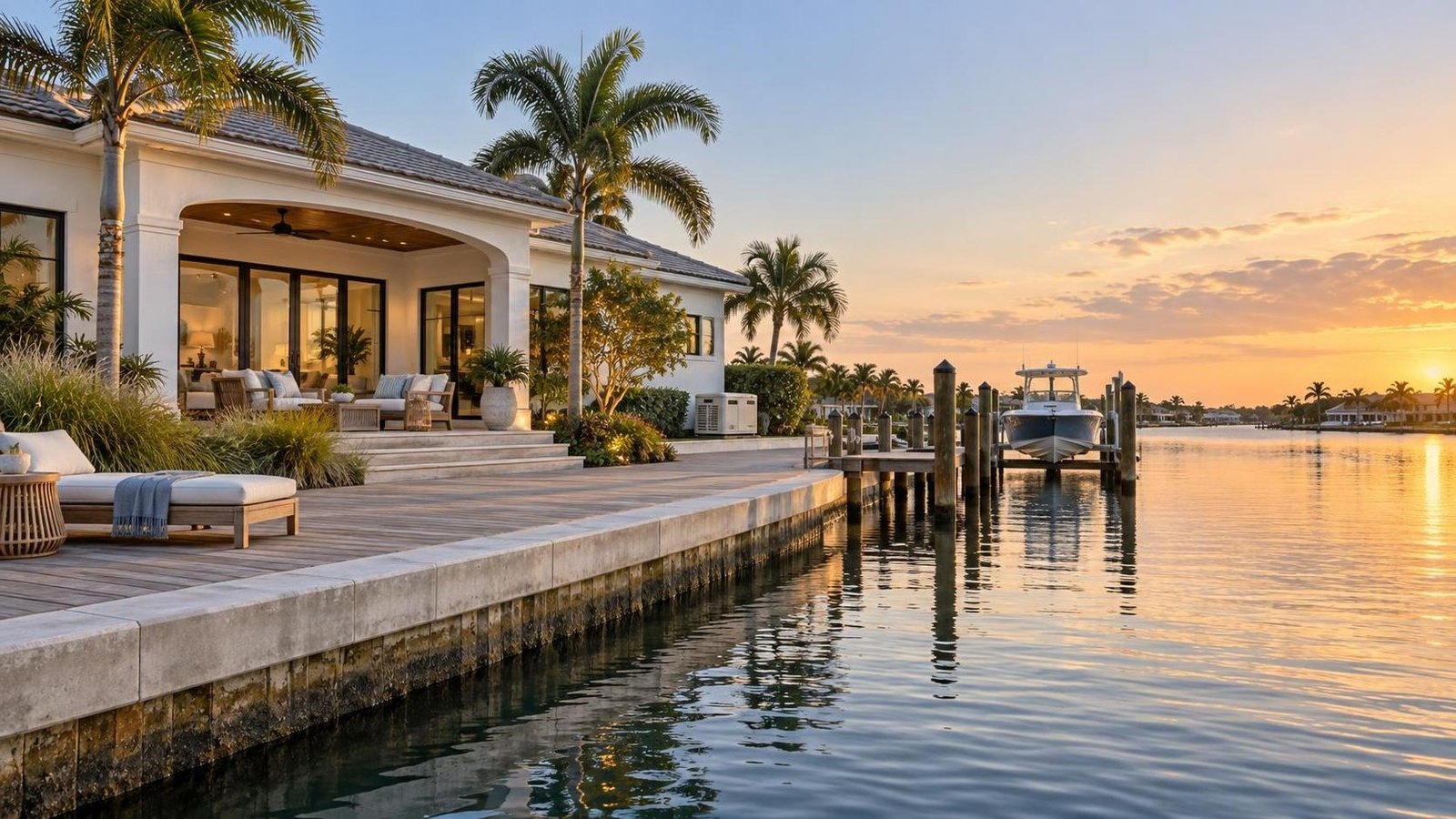
Seawall Tieback Repairs or a Whole-Home Generator: Which Merritt Island Canal Home Is the Better Buy?
By Carrie Liotta, Space Coast REALTOR® with REAL Broker | Published September 20, 2026
Prioritize the canal home with documented seawall tieback repairs when the shoreline is structurally clearer and the competing generator is mainly a convenience upgrade. A generator can be added later; uncertain waterfront support can change safety, use, financing comfort, and resale. The exception is a household with critical medical or power-continuity needs and a seawall that specialists confirm is sound.
This is exactly the kind of Merritt Island comparison that listing photos make too simple. One home has fresh paint, a newer automatic generator, and an older seawall with vague repair history. The other needs interior updates but comes with engineering details, permits or approvals where applicable, paid invoices, photographs, and a recent professional evaluation of tieback and drainage work. I would not give the generator home an automatic premium.
I would compare the infrastructure first, then price the interiors.
Why the seawall file usually carries more weight
A seawall is not backyard decoration. It helps define the edge between the lot and the canal, and its performance depends on more than the visible cap. Wall panels, joints, footings, tiebacks or anchors, drainage, soil retention, and previous repairs all affect the story. A freshly coated cap can look reassuring while movement, voids, erosion, or drainage problems remain unresolved.
Tiebacks generally connect the wall to anchoring components behind it. If repairs were necessary, buyers need to know what condition prompted the work, which portion was addressed, who designed or performed it, and whether the project received required reviews and final approval. “Tiebacks repaired” in a listing is not enough.
Ask for the proposal, engineering or contractor scope, permit records, inspection results, paid invoice, photographs taken before the area was covered, material specifications, warranty, and any recommended monitoring. Confirm that the documents belong to this property and identify the repaired section. If records reference adjacent work or shared responsibility, review the survey and legal documents rather than assuming the entire wall is included.
My guide to documenting Merritt Island seawall drainage and tieback repairs explains why a clean shoreline file helps both sellers and buyers move from vague concern to a specific evaluation.
A newer generator still needs proof
A whole-home generator can be valuable, especially for medical equipment, refrigeration, remote work, frequent travel, or a household that cannot safely manage portable equipment. But “whole-home” is marketing shorthand until a licensed professional confirms the installed capacity, transfer equipment, load controls, fuel arrangement, and actual circuits served.
Request the model and serial number, installation permit and final, transfer-switch information, load-management design, warranty, maintenance records, battery history, fuel details, and the most recent service report. Ask whether air conditioning, water heating, cooking, pool equipment, dock equipment, and well or lift pumps can run together or are automatically sequenced.
Ready.gov’s current outage guidance recommends identifying electricity-dependent needs and emphasizes that generators must operate outdoors and away from windows, doors, and attached garages. For a purchase, I would add site-specific questions: Can the unit be serviced without crossing a narrow side yard? Has landscaping reduced clearance? Is it above likely standing water? Does its noise affect bedrooms or the canal patio?
A generator can be an excellent asset and still be less important than the shoreline. It also has an ongoing service life. A newer enclosure should not distract you from an aging roof, corroded electrical components, missing service history, or a fuel setup that does not match your outage plan.
Start with two independent inspections
Do not ask the general home inspector to settle both questions alone. The home inspection is important, but a canal purchase may justify a marine contractor or qualified engineer for the seawall and a licensed generator or electrical professional for the backup-power system. The specialists should answer different questions.
For the shoreline, ask about visible movement, cracking, separation, cap condition, evidence of soil loss, drainage, nearby sinkholes or depressions, tieback evidence, prior patching, and whether additional investigation is recommended. The buyer should understand the limits of a visual inspection, especially where landscaping, decking, a pool enclosure, or fill conceals part of the system.
For the generator, ask for safe operation testing, transfer behavior, error history, maintenance status, fuel supply, load priorities, and likely near-term service. Never improvise a high-load demonstration during a showing. Coordinate a controlled evaluation with the appropriate professionals and the seller’s permission.
This approach follows the same discipline I recommend when buyers compare a newer roof with a stronger seawall inspection on Merritt Island: inspect each expensive system on its own terms, then compare the combined ownership risk.
Verify jurisdiction, permits, and the exact repair scope
Central and south Merritt Island addresses are often in unincorporated Brevard County, but buyers should confirm the jurisdiction for the exact parcel instead of relying on the mailing address. The Brevard County building-permit resources are a starting point for county records. Waterfront work may also involve other agencies depending on location and scope; the St. Johns River Water Management District permitting page is one place to begin that inquiry.
A permit search is not a substitute for professional review. Older records may be incomplete, a permit title may not describe the full field condition, and a closed permit does not guarantee unlimited remaining life. Still, a clear record can help you determine whether the work matches the seller’s description and whether required finals were recorded.
Apply the same standard to the generator. Verify that electrical, gas, pad, and transfer work appears in the appropriate file, and confirm any HOA architectural approval. If a fence, pool enclosure, or later improvement changed access around either system, compare the dates and approved plans.
Build a five-year ownership budget, not a feature scorecard
For the documented-seawall home, include interior updates, routine generator alternatives, flood and homeowners insurance, dock and lift maintenance, drainage monitoring, and reserves for future shoreline work. For the generator home, include any recommended seawall investigation or repair, generator service, fuel, battery and wear items, interior updates, and the same insurance and marine costs.
Get written estimates during the inspection period when a specialist identifies work. Do not assign one generic “seawall replacement cost” to every property. Access, length, material, canal conditions, engineering, staging, neighboring improvements, and permitting can change the scope. Do not assume the generator’s retail price equals its resale value either. Installation quality and fit for your critical loads matter more than the invoice headline.
Then protect liquidity. If buying the generator home would leave no reserve for shoreline work, the property may be too risky even if the kitchen is beautiful. If buying the repaired-seawall home leaves enough cash to improve interiors gradually and create a safe backup-power plan, that may be the more manageable sequence.
Flood information belongs in both comparisons
Canal frontage requires address-specific flood review. The FEMA Flood Map Service Center is the official public source for NFIP flood-hazard information, and FEMA notes that effective information can be updated or superseded. Check the exact property, then obtain current insurance quotes based on the house, elevation information, coverage, deductibles, lender requirements, and your intended use.
A seawall does not make a home “flood-proof,” and a generator does not guarantee operation through every event. Ask where electrical components, fuel equipment, HVAC, dock circuits, and pool controls sit relative to expected water and drainage paths. Review evacuation and re-entry planning separately from backup power.
How I would structure the offer
On the documented-seawall home, I would make the offer contingent on confirming the repair record, present condition, survey, permits or approvals, insurance, and the buyer’s inspection rights. If the file is strong, the negotiation can focus on interior condition and remaining maintenance rather than guessing at the shoreline.
On the generator home, I would avoid paying a large equipment premium until the seawall uncertainty is bounded. The buyer may request additional inspection time, access for a marine specialist, existing reports, repair estimates, or a price and credit structure supported by the findings. Credits must work with the contract, lender, appraisal, and closing-cost limits; they do not solve every major repair.
Keep the language factual. The goal is not to label one house unsafe from a photograph. It is to obtain enough evidence to understand which obligations transfer at closing.
Consider resale before choosing the prettier interior
Future Merritt Island canal buyers are likely to ask the same questions about the seawall, dock, boat route, flood exposure, and generator. A complete tieback-repair file can remain useful through future sales if the work continues to perform and maintenance is documented. A generator can also support resale, but missing service records or an aging unit can quickly turn an upgrade into another inspection item.
Interior finishes are easier to understand and change. Shoreline uncertainty is harder to price. That is why I generally prefer the home where the difficult waterfront work has a credible paper trail, even if I would repaint, replace flooring, or renovate the kitchen over time.
My decision checklist
- Match repair records, plans, invoices, photographs, and warranties to the exact seawall section.
- Use a qualified waterfront specialist to evaluate current condition and the limits of prior work.
- Verify generator capacity, transfer equipment, served loads, permits, service history, and safe location.
- Review the survey, easements, dock rights, drainage routes, and any shared obligations.
- Check the current FEMA map and obtain property-specific insurance quotes.
- Price both homes over five years, including interiors, maintenance, and realistic reserves.
- Preserve enough inspection time to investigate rather than relying on listing language.
Bottom line
When two Merritt Island canal homes both need cosmetic work, I would usually choose documented seawall tieback repairs over a newer whole-home generator. The shoreline is fundamental to the waterfront property; backup power can often be improved later. Choose differently only when specialists support the seawall condition and automatic power solves a genuine household need that cannot reasonably wait.
I am Carrie Liotta, a Space Coast REALTOR® with REAL Broker, and I publish 321 Coastal Living to help buyers examine the house and the water. If you are comparing canal homes with very different infrastructure stories, reach out for a no-pressure conversation about the records, inspections, and ownership budget. Your next chapter starts here.
