

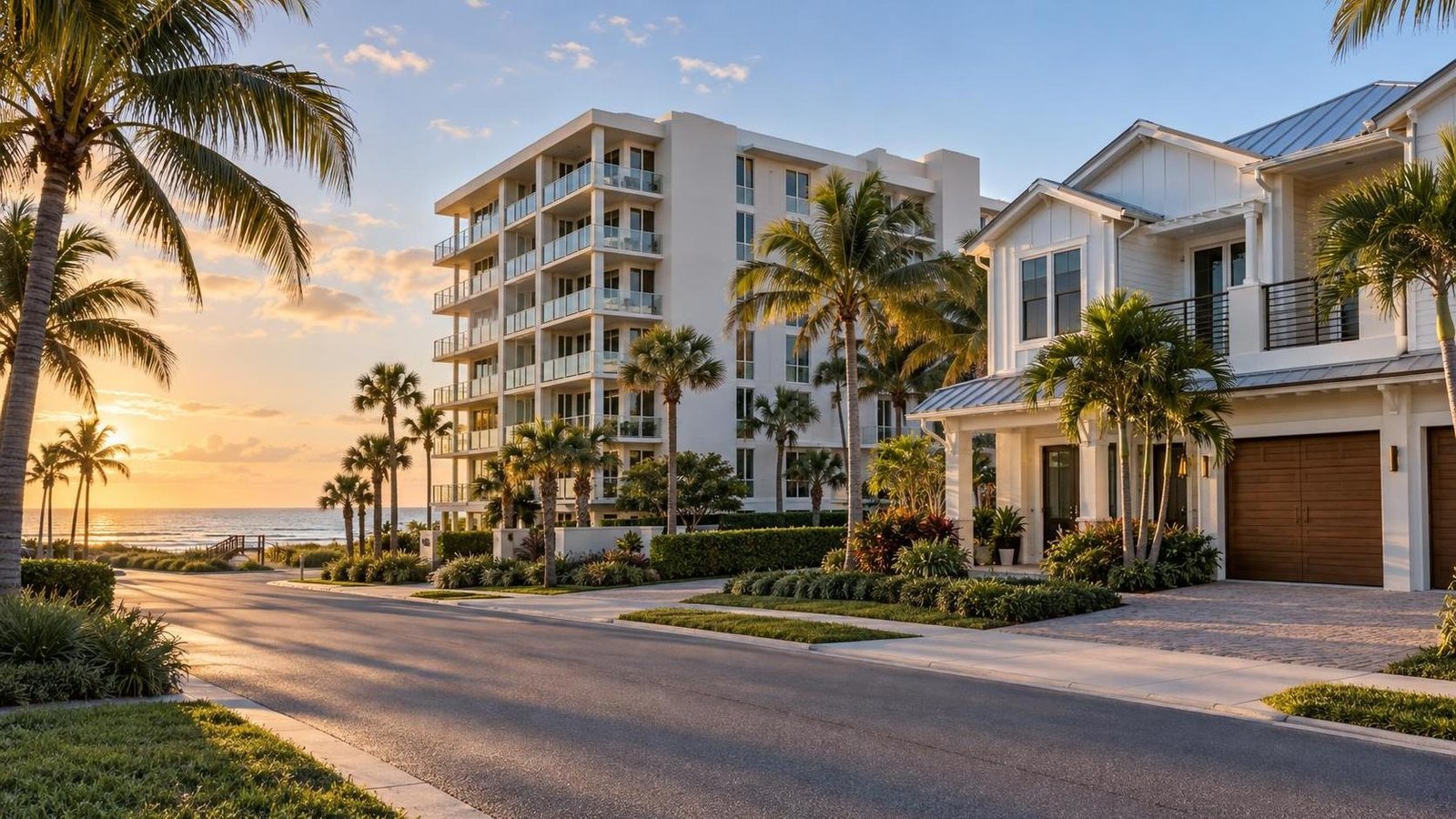
Older Cocoa Beach Condo With Strong Reserves or Newer Building With Less History?
By Carrie Liotta, Space Coast REALTOR® with REAL Broker | Published September 14, 2026
I would usually favor the Cocoa Beach oceanfront building with the clearer maintenance record, adequate insurance, documented structural planning, reliable reserves, and clean financing path—even when it is older. A newer building can be the better choice when its construction, warranties, governance, funding, and remaining developer obligations are transparent. Age alone does not decide project health.
The comparison becomes useful when both associations answer the same questions. What does the building own? What major components will need money during the next five years? What has already been repaired? What remains under warranty? How much can the budget absorb? Can your lender, insurer, and future buyer understand the project without chasing missing records?
Why an older building can be the more predictable choice
An older oceanfront condo has lived through years of salt, wind, rain, insurance renewals, owner turnover, and capital projects. That history can reveal recurring leaks, concrete and balcony work, elevator reliability, roof cycles, plumbing issues, waterproofing performance, and how the board responds when costs rise.
If the association has completed important work, funded reserves responsibly, kept detailed minutes, maintained appropriate insurance, and communicated clearly, age can become a known quantity rather than a mystery. Buyers may still pay a higher monthly fee, but the fee may reflect actual coastal ownership costs instead of deferred decisions.
My article on positioning a Cocoa Beach condo after paid structural repairs and a higher HOA fee shows why completed work can strengthen the resale story when the documentation is organized.
Why newer does not automatically mean lower risk
Newer construction may offer younger roofs, elevators, windows, doors, plumbing, electrical systems, waterproofing, and finishes. It may also provide builder or manufacturer warranties. Those are real advantages, especially for buyers who want a simpler first few years.
But a newer association may have a shorter operating history, budgets influenced by developer assumptions, incomplete turnover, limited claim history, evolving vendor contracts, or components whose long-term coastal performance is not yet established. A low initial fee may be sustainable—or it may not yet reflect the building’s mature operating and reserve needs.
Ask who controls the association, how many units remain developer-owned, what obligations transfer at turnover, which warranties exist, how claims are made, what defects have been reported, and whether litigation or pre-litigation activity exists. Have qualified legal and inspection professionals review concerns rather than relying on sales-center summaries.
Start with the legal and records framework
Florida’s Condominium Act, Chapter 718 addresses the condominium form of ownership, association duties, budgets, records, assessments, sales disclosures, and other owner rights and obligations. Your contract and the building’s current documents control the transaction details, so use an attorney when legal interpretation is needed.
The Florida DBPR condominium information site summarizes state-law developments involving building safety, milestone inspections, structural integrity reserve studies, funding, transparency, and owner education. It also links to the state’s SIRS reporting resources.
For each building, request the declaration, bylaws, articles, rules, current budget, year-end financials, reserve schedule, applicable SIRS and milestone materials, engineering reports, insurance, recent minutes, assessment history, contracts, litigation information, owner delinquency information, warranties, and management contacts.
Compare reserves by obligation, not bank balance
A larger reserve account is not automatically adequate. Match reserve funds to the components the association must maintain and the timing and cost assumptions in the studies. Look for roofs, elevators, painting, waterproofing, concrete, balconies, pavement, pool, plumbing, fire and life-safety systems, seawall or dune-related obligations where applicable, and other major common elements.
Ask whether estimates are current, whether completed work changed the schedule, and whether funding relies on regular contributions, assessments, loans, or another lawful method. A building can have cash and still face a major unfunded obligation. Another can have recently spent reserves on necessary work and now show a lower balance with a defensible replenishment plan.
Read my comparison of a healthy-reserve Cocoa Beach condo versus a cheaper unit with more uncertainty for a unit-level version of the same decision.
Do a five-year assessment stress test
List known projects, recommended repairs, deferred items, insurance changes, contract renewals, and reserve contributions for both buildings. Then ask how each would fund a cost overrun or new problem. Review recent assessments: purpose, amount, payment schedule, completion status, final cost, and whether every owner has paid.
Do not ask anyone to promise that there will be no future assessment. Instead, decide whether the building has identified obligations, realistic funding, and a pattern of responding before problems become emergencies. Carry your own reserve because even a well-managed coastal association cannot make ownership cost-free.
Send both buildings to the lender early
Condo financing evaluates more than the borrower and the unit. Lenders may review project insurance, budgets, reserves, structural or repair concerns, litigation, assessments, ownership concentration, commercial use, and other characteristics. Do not assume prior financing in the building guarantees approval for your loan now.
Fannie Mae’s current ineligible condo project guidance addresses characteristics such as certain litigation, critical repairs, deferred maintenance, insurance, assessments, and project structure. Your lender determines the applicable review for your transaction, so submit the exact building and loan scenario before the document period becomes a race.
A newer building can create questions about developer control or ownership concentration. An older building can create questions about repairs or insurance. The safer choice is the one your financing team can clear using complete, current records—not the one that sounds simpler at a showing.
Compare master insurance and owner responsibility
Ask for current evidence and summaries, but have licensed insurance professionals explain coverage and deductibles. Identify what the association insures, what the unit owner must insure, how hurricane and other deductibles may be allocated, and whether major coverage changes or claims have been discussed.
Obtain an HO-6 quote for each unit using its floor, improvements, occupancy plan, rental use if any, and lender requirements. Review flood context and whether separate coverage is required or advisable. A newer building’s construction may help one part of the risk profile, while its association policy or deductible structure changes another.
Read minutes for behavior, not just problems
Every coastal building has maintenance. Meeting minutes show whether leaders identify issues, seek professional input, obtain bids, communicate costs, enforce collections, and close projects. Repeated references to the same leak, elevator outage, insurance gap, defect, or contractor dispute without resolution deserve follow-up.
For a newer building, look for punch-list items, water intrusion, warranty claims, transition studies, owner turnover, vendor changes, and developer-related disputes. For an older building, look for concrete restoration, balcony and waterproofing cycles, roof, plumbing stacks, electrical, elevators, fire systems, pavement, pool, and exterior coatings.
Ask for reports referenced in minutes. A sentence saying “engineer update” tells you almost nothing without the underlying scope, findings, bids, or completion record.
Put livability back into the decision
A financially stronger building can still be wrong for your daily life. Compare parking, elevators, stairs, storage, pet rules, rental limits, guest access, renovation rules, package delivery, storm procedures, beach access, balcony use, noise, management responsiveness, and accessibility needs.
Full-time buyers should test the route from car to unit with groceries, guests, pets, and beach gear. My guide to lower-floor Cocoa Beach condo access, parking, and storage explains why practical movement can outweigh a higher-floor view.
My side-by-side building worksheet
For both associations, record the source and date for each answer:
- Current monthly fee and exactly what it covers.
- Reserve obligations, balances, funding plan, and study assumptions.
- Milestone, SIRS, engineering, repair, and completion documentation.
- Open, paid, proposed, or discussed assessments.
- Master insurance, deductibles, claims context, and HO-6 quote.
- Lender project-review status for your loan type.
- Litigation, warranty claims, defects, and developer turnover.
- Elevator, roof, concrete, waterproofing, plumbing, pool, and life-safety history.
- Rules, parking, storage, pets, rentals, and renovation fit.
- Your five-year association payments plus personal contingency reserve.
Score documentation quality separately from the answer itself. A building that responds quickly with organized current records is easier for buyers, lenders, insurers, and future resales to understand.
When the older building wins
Choose the older building when major components have been professionally evaluated, important work is documented, reserves and assessments match the obligations, insurance and financing are workable, and the rules fit your life. Its higher fee may buy transparency and completed maintenance rather than inefficiency.
When the newer building wins
Choose the newer building when construction and warranties are documented, the budget reflects realistic operations, turnover and ownership concentration are understood, insurance and financing are clean, and you value younger components enough to accept a shorter performance history.
The bottom line
An older Cocoa Beach condo with strong reserves can be safer than a newer building with a thin record, and a newer building can be an excellent purchase when its funding and governance are already disciplined. Compare obligations, evidence, and five-year cost—not birthdays and brochure photos.
I help Cocoa Beach buyers read the building before they commit to the unit. Reach out for a no-pressure conversation about Cocoa Beach and Brevard County condos for sale with REAL Broker. We will compare reserves, repairs, insurance, financing, and daily life so your next chapter starts with clearer numbers.
