

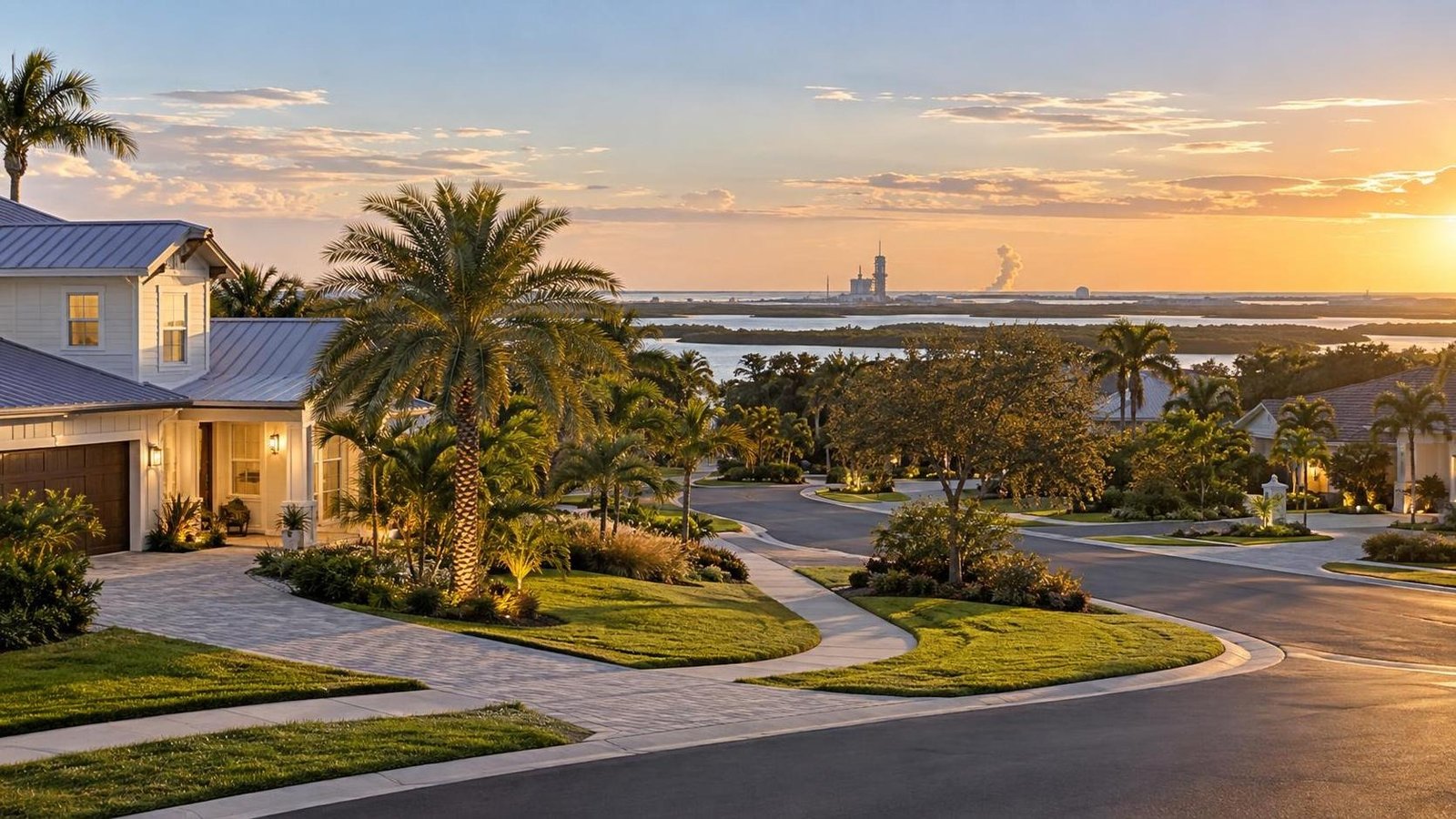
What Should Titusville Buyers Inspect Before Paying More for a Launch-View Home?
By Carrie Liotta, Space Coast REALTOR® with REAL Broker | Published September 14, 2026
Before paying a premium for a Titusville launch-view home, verify the view from the places you will actually use, identify who controls the land and vegetation in that sightline, inspect the home for roof, opening, vibration, flood, and insurance concerns, and experience the neighborhood during both an ordinary day and a launch window.
A launch view can be a wonderful part of North Brevard life, but “you can see launches” is not one standardized feature. One home may offer a broad Indian River Lagoon panorama from a screened lanai. Another may show only the upper arc after the vehicle clears trees and roofs. Both may be enjoyable, but they should not command the same premium.
Define the launch view in practical terms
Ask the seller and listing agent to identify where people stand, which direction they face, and what portion of a typical event is visible. Then verify it independently. Bring a compass, compare map orientation, and look from the kitchen, main living area, primary bedroom, porch, yard, balcony, and any other space that contributes to the price.
Evaluate the view seated and standing. A screen frame, railing, roof overhang, mature hedge, or neighboring home can disappear in a high-angle listing photo but dominate normal use. Note whether seeing the view requires walking to one rear corner, climbing stairs, or looking through glass that reflects interior light at night.
NASA’s official events and launch schedule demonstrates why dates are often described with terms such as “no earlier than” or remain under review. Launch timing, mission status, weather, operations, and viewing conditions can change. Buy the property for a lifestyle that works between launches too.
Find out who controls the sightline
The view is partly outside the parcel, so research neighboring lots, vacant land, public property, easements, vegetation, zoning, and allowable development. Ask for the survey and title materials and use the City of Titusville’s official site to reach current planning, permitting, map, and floodplain resources.
Do not assume a vacant lot, low commercial building, or line of trees will remain unchanged. Do not assume vegetation can be trimmed because it affects the view. Determine ownership and applicable rules before assigning permanent value to a corridor you do not control.
If an HOA is involved, review architectural and landscaping standards, balcony or screen rules, rental limits, parking, and records. The association may control common vegetation or exterior changes that shape the view.
Inspect roof, openings, and exterior connections
A launch-view premium does not offset an uncertain Florida insurance file. Request roof permit and age information, wind mitigation, opening-protection details, and service records. Have the home inspector examine roof covering, flashings, soffit, fascia, attic areas, windows, doors, screens, railings, and exterior attachments.
For balconies, elevated decks, large glass openings, and screen enclosures, ask specialists about condition, fasteners, corrosion, waterproofing, drainage, and permit history. These are everyday wind-and-weather questions even before sound or vibration enters the conversation.
Launch and sonic-boom experiences vary with mission, vehicle, trajectory, weather, and location. A buyer should not diagnose a crack or loose fixture as “launch damage” without professional evidence. Instead, document existing conditions and ask the inspector to identify movement, deferred maintenance, failed seals, rattling components, or structural concerns that merit specialist review.
My detailed guide to boom and vibration checks for Titusville launch-view homes explains how to keep that investigation practical and evidence-based.
Check flood, drainage, and river-adjacent exposure
Some of Titusville’s most dramatic views are closer to the Indian River Lagoon, but river proximity does not create one universal flood or insurance answer. Search the exact address at the FEMA Flood Map Service Center, the official public source for NFIP flood-hazard information, and obtain property-specific insurance guidance.
Ask for elevation documentation when available, prior water-intrusion information, drainage or flood repairs, and permit history. Walk the lot for low areas, ponding, shoreline or ditch context, roof runoff, neighboring grades, and access-road elevations. Visit after rain when possible.
Flood zone, stormwater performance, storm surge, wind exposure, and lender requirements are related but distinct. A map is one input; an insurance quote and physical inspection complete more of the picture.
Experience a launch day if the premium is meaningful
If timing allows during your search, visit the area around a publicly announced launch window. You are not only testing the sky view. Observe traffic, roadside parking, pedestrian activity, lights, pets, noise, guest behavior, bridge or US-1 congestion, and how easily you can enter or leave the property.
Schedules can move, so this may require flexibility and may not be possible during a contract period. If you cannot attend, ask for an unedited video from the normal viewing location and compare it with your own compass and sightline research. Treat seller-provided media as useful context, not independent verification.
Test nighttime usability
Many launch events and the most dramatic visible trails occur after dark, which changes the home experience. Visit at night to evaluate streetlights, neighboring exterior lights, interior reflections, insects, traffic, and whether the chosen viewing area is safe and comfortable. Turn off your own test-room lights and note how screens and glass affect clarity.
Check balcony, step, pool, and pathway lighting without assuming brighter is better. Fixtures should support safe movement while respecting applicable community rules and nearby properties. If a future deck, screen enclosure, shed, or viewing platform is part of the dream, verify survey, setback, HOA, structural, and permit feasibility before pricing it into the purchase.
Audit every yard and viewing-area improvement
Launch-view yards often collect useful additions: sheds for chairs, extended patios, screen rooms, power outlets, exterior speakers, fencing, gates, landscaping, and parking pads. Ask for permits, plans, finals, warranties, and HOA approvals where applicable. Compare records to the physical dimensions and location.
An unpermitted feature can create financing, insurance, repair, or resale friction regardless of how well it frames the view. My Titusville launch-view seller guide to yard, shed, and screen permits gives buyers a useful list of records to request.
Compare the premium with a public-viewing alternative
Titusville has a strong community identity around launches and riverfront viewing. Before paying significantly more for a private view, decide how often you will use it and what public or nearby options offer. A home a few minutes away may have a newer roof, quieter street, stronger yard, lower flood exposure, or better commute while still keeping launches accessible.
Private viewing earns its premium when it improves ordinary life too: water or sky outlook, privacy, natural light, outdoor use, and an easy guest experience. If the feature matters only a handful of nights and requires compromises every day, separate the experience from the real-estate value.
Place the view inside the full relocation decision
Kennedy Space Center, Blue Origin, Cape Canaveral, or contractor employees should drive the exact work entrance at their actual shift time. Include bridge, gate, badge, and backup-route realities where relevant. Then compare school, childcare, grocery, medical, airport, and beach routines.
My North Brevard space-industry relocation checklist connects KSC access with weather, insurance, schools, utilities, and move-in planning. A launch view should support that weekly life rather than distract from it.
How I would calculate the premium
Compare recent, genuinely similar homes with and without the usable view. Then adjust your personal offer ceiling for:
- How broad and unobstructed the sightline is.
- Whether the view works from primary living and outdoor areas.
- How much of the corridor is outside your control.
- Roof, openings, deck, screen, and yard-improvement condition.
- Flood, drainage, wind, and property-specific insurance costs.
- Launch-day access, parking, traffic, lighting, and noise.
- The home’s appeal when no launch is scheduled.
Do not assume every future buyer will pay the same amount you would. A documented, comfortable, easy-to-photograph view broadens the story. A narrow glimpse from an awkward corner is a lifestyle bonus, not necessarily a major valuation category.
My launch-view inspection checklist
- Verify compass direction and view from seated and standing positions.
- Identify neighboring ownership, zoning, vegetation, and development context.
- Inspect roof, attic, openings, screens, balconies, rails, and exterior attachments.
- Document cracks, seals, rattles, and movement without guessing at causes.
- Review flood maps, elevation information, drainage, and insurance.
- Audit permits and approvals for every viewing-area improvement.
- Visit by day, after dark, after rain, and near a launch window when feasible.
- Test commute, parking, guest access, and ordinary-week livability.
The bottom line
A Titusville launch-view home can deliver a distinctive Space Coast lifestyle, but the premium should rest on a verified sightline, sound structure, manageable risk, and a property you enjoy on the many days between missions. Inspect the feature as carefully as the roof.
I help North Brevard buyers compare the view, commute, insurance, permits, and future resale without turning an exciting moment into an unsupported assumption. Reach out for a no-pressure conversation about Titusville and Brevard County homes for sale with REAL Broker. Your next chapter starts here.