

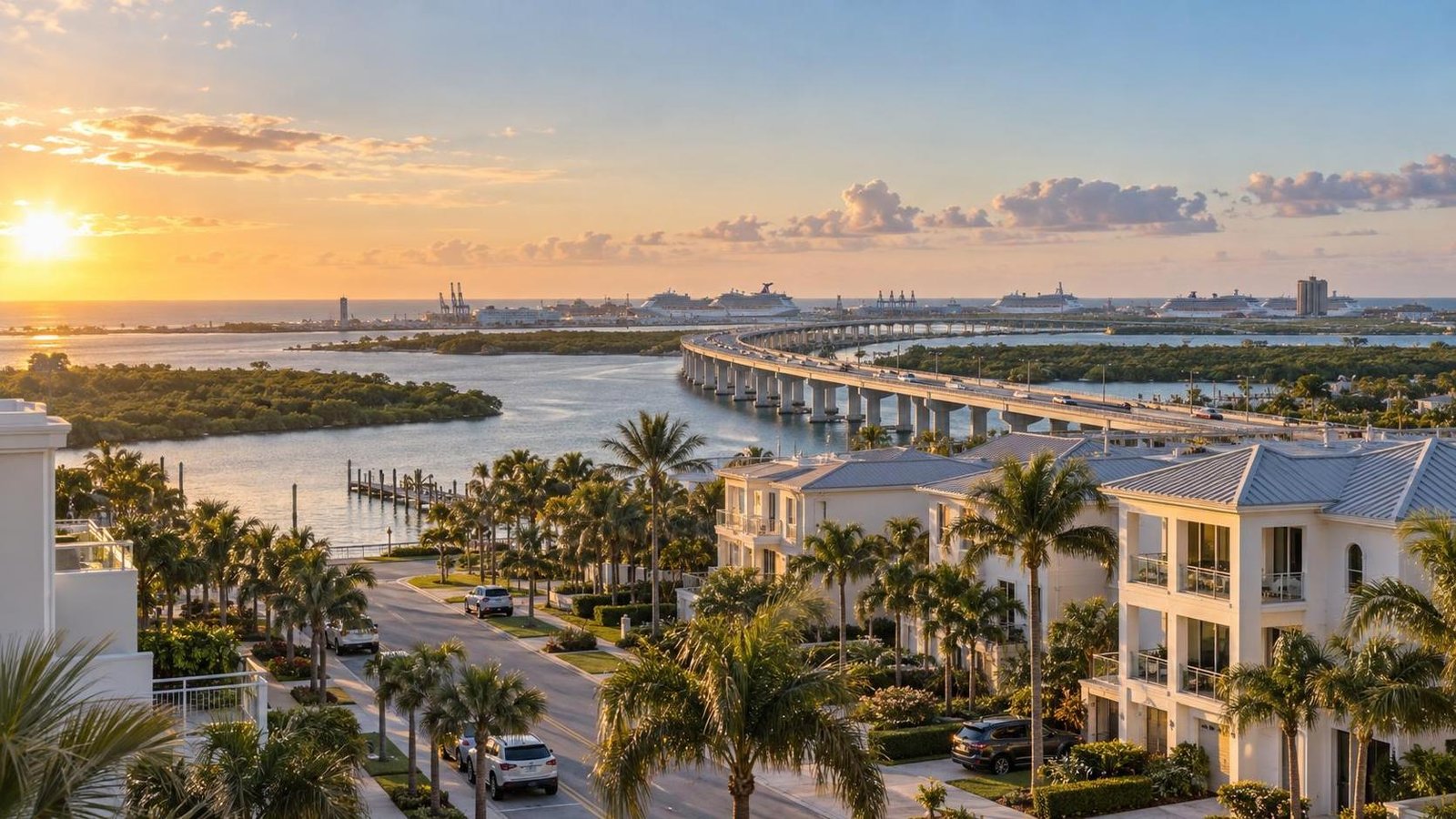
Quiet Cape Canaveral Condo or Faster SR 528 Access: Which Should Relocators Choose?
By Carrie Liotta, Space Coast REALTOR® with REAL Broker | Published September 13, 2026
Choose the quieter residential Cape Canaveral condo when you work from home, keep irregular hours, expect frequent guests, or want beach life to feel calm after the novelty wears off. Choose the unit with the faster SR 528 route when your weekly schedule depends on Orlando International Airport, KSC-area work, mainland appointments, or frequent regional driving—and only after you test whether cruise-day traffic actually affects that building’s entrance.
A map can make two condos look equally convenient. In daily life, one extra turn, a busy intersection, a controlled entrance, a garage queue, or a line of visitors heading toward the port can change the experience. I tell relocating buyers to compare the door-to-destination route and the last 500 feet home, not just the distance from a pin to the highway.
Decide what “fast access” needs to accomplish
Write down the destinations you will use in a normal month: work entrance, airport terminal, grocery store, medical appointments, beach access, gym, family visits, and schools if relevant. Add the hours you travel. A weekday commute before sunrise can behave differently from a late-morning airport run or a weekend trip when ships are turning over passengers.
State Road 528 is not just a local shortcut. The Central Florida Expressway Authority’s SR 528 page describes the Beachline as a connection among Orlando International Airport, east-coast beaches, Cape Canaveral, Kennedy Space Center, and the aerospace industry. That makes nearby access meaningful for buyers whose lives extend beyond the city.
But saving three minutes to the highway does not matter if you make the trip twice a month and hear traffic every day. Conversely, a wonderfully quiet condo may become frustrating if a flight-heavy job sends you toward Orlando weekly. Weight each route by frequency, not emotion.
Test the last 500 feet on a cruise morning
Regional access and building access are different. A condo can sit close to SR 528 yet have an entrance protected from visitor circulation. Another can be farther from the interchange but lie on a street used as a turnaround, rideshare waiting area, or shortcut. Building orientation, driveway design, gates, left-turn options, and nearby public parking can matter more than the address.
Visit on at least one active port morning and one ordinary weekday. Drive toward the condo from your likely commute direction. Leave again. Try the left turn. Notice lane changes, pedestrians, rideshare vehicles, luggage activity, buses, and any queue at the property gate. The official Port Canaveral site is the proper place to confirm current port and cruise information; do not rely on an old schedule copied into a listing presentation.
I also ask buyers to stand inside the unit with the windows closed, then open. Listen from the balcony, primary bedroom, parking space, elevator lobby, and pool. “Quiet building” can describe the unit while the garage is busy, or the grounds while the balcony faces a traffic pattern.
Remote workers should evaluate rhythm, not only decibels
A short burst of traffic may be easy to tolerate. Repeated backup beeps, gate alarms, rolling luggage, hallway turnover, pool activity, or service vehicles at predictable hours may be more disruptive. If you work on video calls, sleep after a night shift, or record audio, spend enough time in the unit to understand the rhythm.
Ask about construction, trash pickup, landscaping, deliveries, elevator service, and short-term or seasonal occupancy. Read association rules on rentals, moving hours, contractor access, balcony work, and quiet hours. The unit above, hallway layout, and proximity to the elevator can matter as much as outside traffic.
Do not demand perfect silence from a coastal city near a major port. The goal is compatibility. Some buyers enjoy visible ship activity and weekend energy. Others want to step inside and forget it is there.
Parking determines whether cruise traffic is your problem
Confirm the deeded or assigned space, guest spaces, permit system, towing policy, gate controls, loading area, vehicle-size limits, and whether the association enforces them. Count usable spaces on a busy morning rather than trusting the site plan. A strong parking system can isolate residents from outside demand; vague rules can turn every visitor weekend into negotiation.
For households with two vehicles, ask whether the second space is guaranteed, leased, or first come. Find out where movers, contractors, caregivers, and overnight guests may park. If you travel, test whether you can reach the space with luggage during busy hours and whether garage access depends on an elevator with recurring downtime.
My article on Cape Canaveral guest-parking rules versus rental flexibility explains why a restriction that frustrates investors may make full-time life calmer for another buyer.
Do not trade a clean building file for a better route
A convenient condo is not a good relocation purchase if the building’s finances, insurance, reserves, inspections, or repairs do not fit the buyer. Request the declaration, rules, current budget, year-end financials, reserve information, applicable milestone or structural reports, master-insurance evidence, meeting minutes, pending assessment notices, and lender questionnaire information.
Compare exact monthly costs: mortgage, estimated taxes after purchase, association assessment, unit-owner insurance, flood coverage if appropriate, utilities, parking, storage, and known special assessments. A unit ten minutes closer to the highway can still create a more difficult year if the buyer has underestimated a building project.
Read my guide to Cape Canaveral condos for full-time owners needing SR 528 access and secure storage for the physical features that make a commute-friendly building easier to live in once you are home.
Storm and evacuation planning belong in the location decision
Ask how the association secures common areas, communicates closures, limits elevator use, manages gates during outages, and handles reentry after a storm. Confirm the unit’s FEMA flood information, elevation context, master policy, individual insurance needs, and emergency plan. Do not assume highway proximity guarantees uninterrupted access.
Seasonal and frequent-travel owners need a reliable local process for shutters, balcony items, vehicles, keys, water shutoff, and post-storm inspection. Full-time relocators need to know where they would go and how building systems behave when power is interrupted.
My guide to elevator backup, storm closures, and remote access for Cape Canaveral owners shows why a normal-day convenience should be tested against the building’s less-normal operations too.
Make three route tests, not one
I recommend a simple field test before the inspection period ends:
- Workday test: Leave the condo at the time your shift begins and drive to the actual reporting point, not the employer’s mailing address.
- Cruise-day test: Return during an active weekend morning and observe the last mile, entrance, parking, lobby, and noise.
- Ordinary-life test: Buy groceries, visit the beach, collect a guest, and return after dark. The easiest commute home may not be the easiest place to live.
Save each travel time with the date, weather, and reason for delay. Navigation apps are useful, but one predicted time cannot tell you how the property feels. If your job has rotating shifts, test more than one window.
Compare the two condo profiles honestly
The quieter residential option often wins for remote workers, retirees, night-shift households, pet owners who walk frequently, and buyers who want a primary residence rather than a vacation atmosphere. It also may appeal to a future buyer seeking full-time calm. Its tradeoff may be more turns to SR 528, a longer airport route, or less immediate access to port-side activity.
The faster-route option often wins for airline commuters, traveling consultants, aerospace workers, frequent Orlando visitors, and buyers who value quick regional movement. Its tradeoff may be circulation noise, busier entrances, or more visitor energy at certain times. A well-designed building can reduce those effects, so inspect rather than generalize.
Resale depends on both buyer pools. Strong parking, storage, elevator reliability, reserves, insurance, and a practical floor plan usually matter whichever location you choose. A clear route story helps, but so does a unit where someone can sleep, work, host guests, and reach the beach comfortably.
Questions I would answer before offering
- How many weekly trips truly benefit from the shorter SR 528 route?
- What happens at the building entrance on an active cruise morning?
- Can both household vehicles and guests park under enforceable rules?
- Which rooms face the street, pool, garage, elevator, or service area?
- Do rental and move-in rules support the atmosphere you want?
- Are reserves, insurance, inspections, and assessments clear enough for the loan and budget?
- How will storm closure, outage, and reentry procedures affect this unit?
- Which location remains useful if your employer or schedule changes?
Bottom line
The best Cape Canaveral relocation condo is not automatically the one closest to SR 528 or the one farthest from port activity. Choose the quiet building when calm improves every day. Choose the faster route when regional travel shapes every week. In both cases, test the actual entrance during cruise activity and confirm the building file before paying a location premium.
If you are relocating to Cape Canaveral, I can help you test routes, compare condo documents, and separate a genuinely useful location from a convenient-looking map pin. Reach out for a no-pressure conversation about Brevard County homes with REAL Broker. Your next chapter starts here.