

Garage or Shorter Patrick SFB Commute: What Should Satellite Beach Military Buyers Choose?
By Carrie Liotta, Space Coast REALTOR® with REAL Broker | Published September 12, 2026
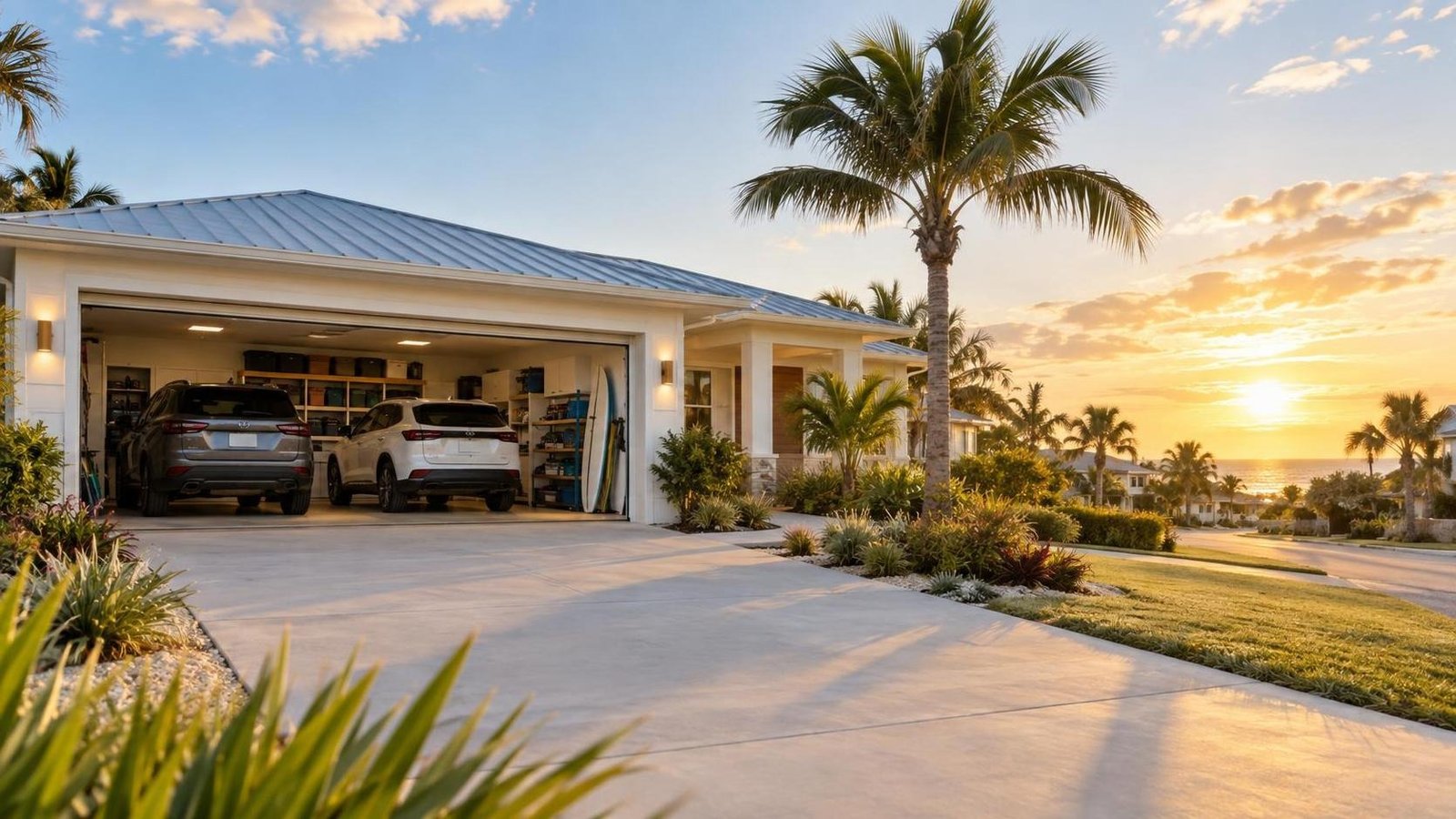
For most Satellite Beach military households, I would prioritize the two-car garage when both homes still offer a reliable, reasonable route to Patrick Space Force Base. Protected storage solves a year-round problem: vehicles, hurricane panels, evacuation supplies, uniforms, tools, bikes, surfboards, and the belongings that follow a PCS move. I would choose the shorter commute instead when shift timing, reporting requirements, childcare handoffs, or frequent trips to the installation make the route difference a daily strain.
This is not a square-footage contest. It is a time-and-risk decision. The garage saves preparation time and protects possessions; the closer location returns minutes on every workday. The right answer appears only after you test the actual route and inventory what you expect the home to hold.
Test the commute before assigning it a value
Do not compare mileage on a listing portal. Drive from each front door toward the installation at the time the service member expects to report, and repeat the test for the return trip. Include school or daycare handoffs, the route a spouse will use, and any schedule that starts before normal business hours or ends during evening traffic.
Installation access, exercises, weather, road work, and special events can change a route. Use the official Patrick Space Force Base website for current installation information rather than relying on a relocation forum or an old commute estimate. Ask your sponsor or unit contact which reporting point and access pattern apply to you; “Patrick commute” is not precise enough.
I have clients time three trips: an ordinary duty day, the tightest childcare day, and a weekend errand run. A house that saves only a small amount on the routine trip may not deserve a major premium. A route that removes a fragile handoff twice every weekday may be worth far more than the map suggests.
Make a real storm-storage inventory
A two-car garage is valuable only if it is usable. Measure the door opening, interior depth, width between shelving or equipment, ceiling clearance, and space occupied by the water heater, laundry, air handler, electrical panels, or permanent cabinets. Confirm that two vehicles actually fit with room to open doors.
Then list the items that need protected storage:
- labeled shutter panels, fasteners, tools, and ladders;
- water, shelf-stable supplies, battery equipment, and document cases;
- bicycles, beach carts, surfboards, fishing equipment, and patio items;
- military gear, work tools, and deployment or moving totes;
- vehicle space when hail, windblown debris, salt air, or evacuation preparation matters; and
- room to bring outdoor furniture, grills, trash carts, and loose items inside before a storm.
A nominal two-car garage can still fail this test. An oversized one-car garage with organized wall storage may work better for one vehicle and gear. Photograph and measure rather than relying on the label in the listing.
Storm protection is a system, not a place to stack panels
Garage storage does not compensate for missing or undocumented storm protection. Verify the roof permit, wind mitigation report, opening-protection records, garage-door rating, shutter or impact-product approvals, and whether every required opening is protected. Confirm that panels match the openings and that the fasteners and installation tools are present.
If the home has a walkable school route but older protection, read my guide to Satellite Beach homes with convenient family logistics and older storm features. The principle is the same: convenience does not erase an insurance or preparation problem.
Look at drainage too. Impact doors may strengthen an opening, but they do not correct standing water beside the slab or garage. My explanation of Satellite Beach impact doors versus unresolved drainage shows why buyers should not let one upgrade dominate the whole risk review.
Flood information belongs beside the garage measurement
The City of Satellite Beach explains that storm surge, king tides, heavy rain, and hurricane events can all contribute to flooding. Its flood information page points residents to FEMA maps, discusses elevation certificates, and notes that development in flood zones may require review for structures, fill, grading, mechanical equipment, pools, and other improvements.
Use the FEMA Flood Map Service Center for the official flood hazard information supporting the National Flood Insurance Program. Then ask an insurance professional to quote the exact property and review elevation information if available.
A garage floor is not automatically appropriate for storing irreplaceable papers or electronics. Check the floor elevation, signs of prior water entry, door seals, slab cracks, wall staining, drainage direction, and seller disclosure. Keep critical records and sensitive gear above likely water exposure even when the garage is your primary storm room.
How the choice affects a VA purchase
A garage itself is not what makes a home VA-friendly. Condition, safety, value, insurance, and financing still need to work. The VA Lenders Handbook portal is the official starting point for appraisal and lending guidance, but your lender and appraiser apply the requirements to the individual property.
Watch for converted garage space, damaged doors, exposed wiring, water intrusion, unpermitted rooms, and repairs that may affect safety or insurability. If part of the garage has been converted, confirm permits, heating and cooling, egress, parking impact, and whether the living area is reflected appropriately in public records and appraisal.
Military buyers often protect cash by using VA financing, but that does not mean every available dollar should go into the purchase. Leave room for insurance deductibles, a PCS transition, storm supplies, maintenance, and the first repair that arrives after closing.
Put a price on each hour the home saves
For the commute, multiply the round-trip difference by likely workdays. Do not treat that total as a dollar-for-dollar home value; use it to understand the family burden. Ten extra minutes during a calm test drive may become something different when combined with a fixed daycare closing time, a spouse’s commute, or a recurring appointment.
For the garage, estimate what the alternative requires. Would you rent a storage unit? Keep one vehicle outside? Install racks and overhead storage? Replace salt-exposed equipment more often? Need a shed that the lot, flood rules, or city approvals may not support? The feature’s value comes from the problem it actually solves.
Also compare fuel, toll-free route options, auto insurance questions, and the cost of a more expensive beachside home. A shorter commute is not free when it comes with a property that needs a roof, difficult insurance, or more storm upgrades.
Think ahead to the next PCS buyer
A functional garage tends to broaden the buyer pool in beachside neighborhoods because storage is hard to create later. Military families, surfers, cyclists, contractors, and full-time residents can all value secure space. But a garage does not overcome a weak roof file, flood uncertainty, or a difficult location.
Proximity to Patrick SFB can also support a clear resale story. The strongest property often offers both a practical route and storage, even if it is not the absolute closest or largest. My countywide guide to Brevard locations that work for VA buyers explains why commute, insurance, condition, and resale should be judged together.
If you expect to sell within three to five years, avoid overpaying for a marginal commute advantage that only one reporting location values. Likewise, do not pay a large garage premium if the interior layout, roof, flood profile, or school logistics will shrink your future audience.
Use this decision rule
Choose the two-car garage when the actual commute from both homes is acceptable, the garage is truly usable, your household owns substantial gear, storm setup would otherwise consume living space, and the rest of the property has a sound insurance and flood file.
Choose the shorter commute when the tested route removes a recurring childcare or shift conflict, the service member makes multiple installation trips, the farther home creates unreliable timing, and the smaller-storage property still has a safe plan for panels, supplies, vehicles, and outdoor items.
Keep looking when the closer home is difficult to insure or the garage home creates a commute that the family already resents during the test drive. A forced compromise usually becomes more noticeable after the move.
A showing checklist for military buyers
- Drive each route at the reporting and return times you expect to use.
- Measure the garage and park the actual vehicle configuration when possible.
- Inventory shutters, fasteners, ladders, evacuation supplies, gear, and patio items.
- Review roof, openings, garage-door, wind mitigation, and permit documentation.
- Check flood map, elevation records, drainage, and property-specific insurance quotes.
- Confirm that any garage conversion or storage improvement is permitted and insurable.
- Compare the likely next PCS buyer, not only your first month in the home.
Bottom line
In Satellite Beach, a real two-car garage can be more than parking. It can be the room that makes coastal military life manageable. But when a shorter Patrick SFB route protects a shift schedule or family handoff every day, time can outrank storage. Test both with evidence before assigning either one a premium.
If you are PCSing to the Space Coast, I can help you time the routes, review the storm and insurance file, and compare homes through a three-to-five-year resale lens. Join my private Facebook group, Moving to Brevard County Florida, or reach out for a no-pressure conversation about Brevard County homes for sale. Your next chapter starts here.