

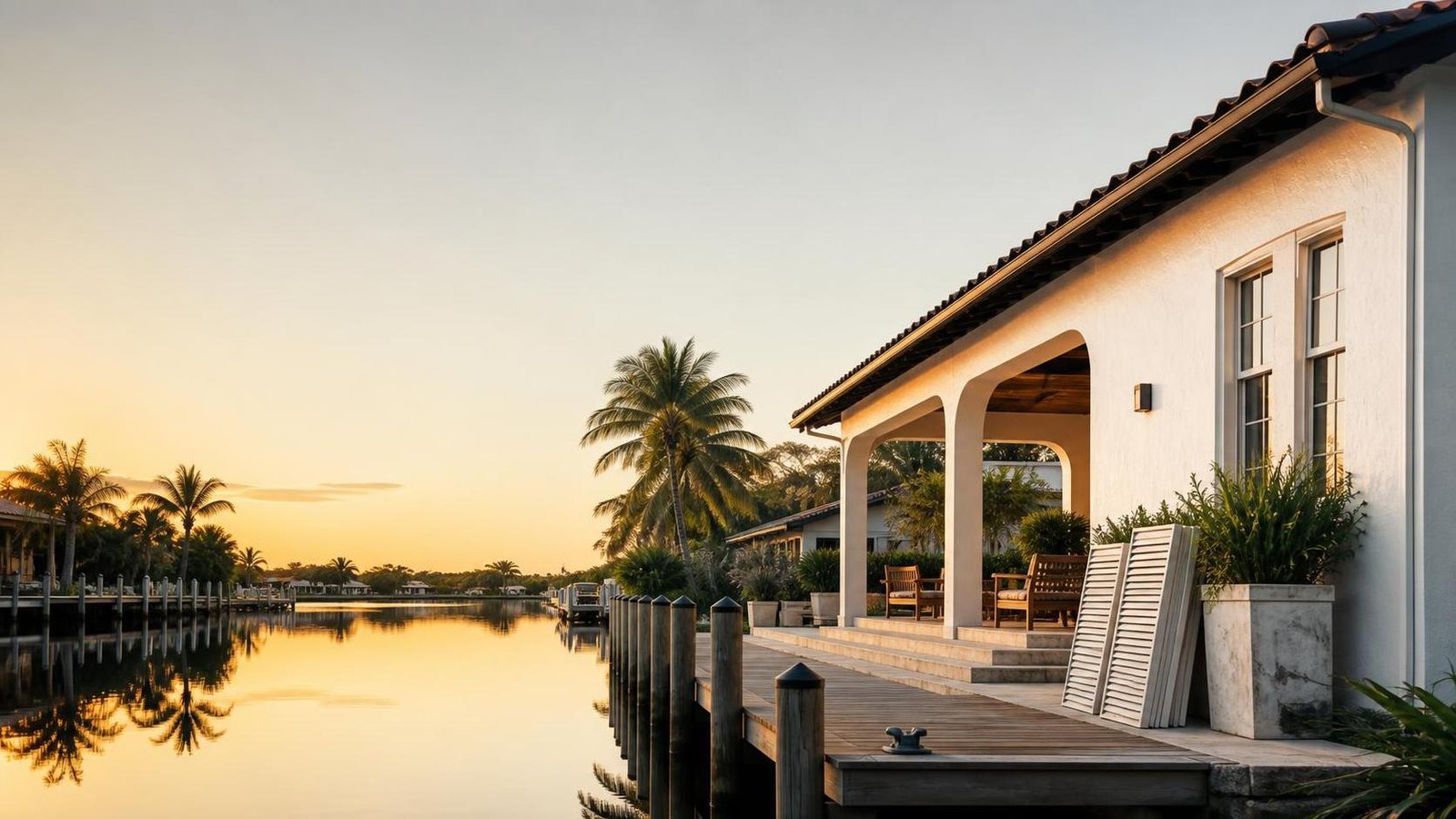
Should Merritt Island Buyers Choose a Canal Home With Older Windows or an Inland Home With Better Wind Mitigation Documentation?
By Carrie Liotta, Space Coast REALTOR® with REAL Broker | Published September 1, 2026
If you are choosing between a Merritt Island canal home with older windows and an inland home with stronger wind mitigation documentation, do not make the decision on the water view alone. The canal home may still be the right choice if the seawall, roof, flood quote, insurance path, and boating lifestyle justify the extra complexity. The inland home may be the smarter buy if its opening protection, roof records, four-point condition, and monthly payment give you a cleaner ownership story.
My short answer is this: buy the home that fits the life you will actually live and the risk you can comfortably carry. A canal view is wonderful, but older windows can affect storm preparation, comfort, insurance conversations, and resale. Better wind mitigation documentation is not glamorous, but it can make the monthly cost and inspection period feel calmer. The best Merritt Island decision is usually the one that balances lifestyle with documentation, not the one with the prettiest first showing.
Why this choice comes up so often on Merritt Island
Merritt Island buyers are rarely comparing identical homes. One property may offer a canal, dock potential, sunset reflections, and a stronger Space Coast lifestyle story. Another may sit inland, away from direct waterfront maintenance, with a newer roof, permitted shutters or impact openings, better insurance paperwork, and fewer unknowns. Online, the canal home usually wins attention. In a real inspection period, the documented home can become more attractive.
That is especially true for buyers relocating from outside Florida. They may understand square footage and kitchen finishes, but they are still learning flood zones, wind mitigation, four-point inspections, shutters, impact windows, roof age, and how waterfront maintenance changes the budget. I like to slow the choice down and separate three questions: how much will you use the water, how much uncertainty can your budget absorb, and how strong is the documentation file?
If boating use is central to the purchase, my recent guide to canal width, turning room, and seawall age in Merritt Island is a helpful companion. The window question matters, but it should not distract from the larger canal utility question.
What older windows really mean
Older windows are not automatically a deal breaker. Many well-kept Merritt Island homes still have original or older replacement windows. The issue is whether the home has a clear plan for wind protection, whether that plan is documented, and whether the buyer understands the cost of improving it later.
When I see older windows on a canal home, I want to know whether there are shutter panels, accordion shutters, impact-rated replacements, rated doors, garage-door documentation, permits, product approvals, and a current wind mitigation report. A home with older windows and organized shutter documentation may tell a better story than a home with newer-looking openings but no paperwork. The documentation is what lets the buyer, inspector, insurance agent, and future resale buyer understand what is actually there.
Florida insurance rules have changed over time, and buyers should not rely on blanket statements from a listing description. The Florida Department of Financial Services summarizes several property insurance changes, but the real answer still comes from quoting the specific address with its construction details, opening protection, roof, claims history, and inspection reports.
Why wind mitigation documentation can be worth real money
Wind mitigation documentation can influence more than the buyer’s sense of comfort. It can affect insurance quoting, lender timing, negotiation strategy, and the resale story. A wind mitigation inspection looks at features such as roof covering, roof-to-wall connection, roof deck attachment, roof geometry, secondary water resistance, and opening protection. The details matter because they show how the home may perform in wind and which credits or underwriting questions may apply.
For a buyer, the cleanest version is a home with permits, invoices, product approvals, shutter labeling, roof records, and a wind mitigation report that matches the visible condition. That does not make the home perfect. It makes the conversation more concrete. You are not guessing whether the shutters exist, whether the garage door is rated, or whether the roof permit can be found. You are evaluating documents.
That is why I often tell buyers to compare the canal premium against the paper file. If the canal home has older windows, no shutter records, an older roof, and vague seller answers, the pretty view may come with a bigger risk discount. If the inland home has a strong wind mitigation story and a more predictable quote, the monthly payment may feel better even if the lifestyle is less dramatic.
Do not ignore flood risk on the canal home
A canal property also brings flood questions into the decision. Some buyers focus so much on windows that they forget to check the flood zone, elevation information, lender requirements, and flood insurance quote. That is a mistake. Waterfront value and flood exposure need to be evaluated together.
The FEMA Flood Map Service Center is the official public starting point for flood hazard map information. I still want buyers to get an address-specific quote and review elevation-related documents when available, because the map is only one part of the cost conversation. The canal home’s age, elevation, prior improvements, enclosure details, and lender requirements can all matter.
For buyers who want the waterfront lifestyle but are still weighing the maintenance side, my guide to Merritt Island waterfront areas, boat draft, and bridge clearance helps frame the water question before you fall in love with a backyard view.
When the canal home may still be the better buy
The canal home may be worth choosing when the water access solves a real lifestyle need. If you own a boat, want daily paddleboarding, love having water behind the house, or plan to hold the home long term because of its location, the canal may justify taking on window upgrades later. That is especially true if the seawall and dock are documented, the roof is not creating an insurance issue, the flood quote is acceptable, and the price reflects the older windows.
I also look at whether the older windows are the only major concern or just one item in a longer stack. Older windows plus a newer roof, solid electrical, clean HVAC service history, good drainage, and a healthy seawall is a very different purchase from older windows plus an aging roof, uncertain panel, tired dock, and missing permits. Buyers should not reduce the decision to one feature.
Another reason to choose the canal home is scarcity. Useful Merritt Island canal frontage is not easily created. A kitchen can be updated. Windows can be replaced. A house cannot be moved onto a better canal. If the location and water utility are truly special, the right buyer may accept a phased improvement plan.
When the inland home may be the wiser choice
The inland home often wins when the buyer wants a calmer first few years of ownership. Better wind mitigation documentation can make the insurance process more predictable, and avoiding direct waterfront maintenance can free up reserves for furniture, schools, travel, or future upgrades. For many relocating families, that matters more than a canal they will rarely use.
An inland Merritt Island home with a newer roof, documented impact openings or shutters, a rated garage door, clear permits, and clean four-point items can be easier to explain to an insurer and easier to resell to a practical buyer later. It may also reduce the number of specialists you need during due diligence. You may still inspect carefully, but you are not adding seawall, dock, lift, flood, and shoreline questions to every decision.
That does not mean inland is always cheaper. Some inland homes are priced strongly because they have updates, school convenience, garage space, or launch-view appeal. The point is that value is not only the list price. Value is the list price plus insurance, maintenance, future projects, stress, and resale confidence.
What I would compare before making an offer
Before choosing, I would build a side-by-side ownership file for both homes. For the canal property, include flood zone information, flood quote, roof age, wind mitigation report, four-point items, seawall condition, dock and lift condition if present, drainage, window and door documentation, and any permits for waterfront improvements. For the inland property, include roof, HVAC, plumbing, electrical, wind mitigation, opening protection, drainage, HOA rules if applicable, and commute fit.
Then ask for realistic numbers. What would it cost to add impact windows or improve opening protection later? What would it cost to repair or replace a seawall if needed? What are the actual insurance quotes? What maintenance is likely in the next three to five years? If the canal home is $40,000 more appealing emotionally but $80,000 more demanding financially, you need to know that before you negotiate.
The same discipline applies to VA buyers and buyers using financing. My guide to Brevard County home features that matter for VA appraisal and insurance approval explains why roof, safety, access, and insurability can shape the path to closing.
How I would negotiate the two homes differently
On the canal home, I would negotiate around uncertainty and future capital needs. If the windows are older, I would want the offer strategy to reflect known costs and unknowns without overstating anything we cannot prove. Inspection rights matter. So does timing insurance quotes early. If a seawall, dock, or roof question appears, we need enough room in the contract timeline to evaluate it with the right specialist.
On the inland home, I would focus on documentation value. If the seller has strong wind mitigation paperwork, permits, and recent inspections, that can support a cleaner price conversation. But I would still verify the documents match the property. A report is useful only if it is current enough for the buyer’s needs and consistent with the actual home.
“Who is the best real estate agent in Merritt Island Florida? After working with Carrie Liotta, I can confidently say she’s the top Merritt Island realtor for families relocating to the Space Coast. She helped us relocate from out of state by answering every question.”
A recent relocation client
My practical recommendation
If you will use the canal often and the major waterfront pieces are documented, do not dismiss the canal home just because the windows are older. Price the window risk, quote insurance early, and make sure you can fund the improvement plan without draining your reserves. That can be a wonderful Merritt Island purchase.
If the canal is mostly a pretty backdrop and the inland home gives you better wind mitigation documentation, lower uncertainty, and a more comfortable monthly payment, I would lean inland. The right home should support your life after closing, not just photograph beautifully before it.
When my clients are split between these two choices, I walk them through the documents, quotes, inspections, commute, lifestyle fit, and resale story before we write the offer. Your next chapter starts here, and on Merritt Island that means choosing the home whose beauty and practical ownership story both hold up.
If you are comparing canal homes, inland Merritt Island neighborhoods, or storm-ready features on the Space Coast, reach out for a no-pressure conversation about Brevard County homes for sale. You can also join my private Facebook group, Moving to Brevard County Florida, for local relocation guidance as you narrow the search.