

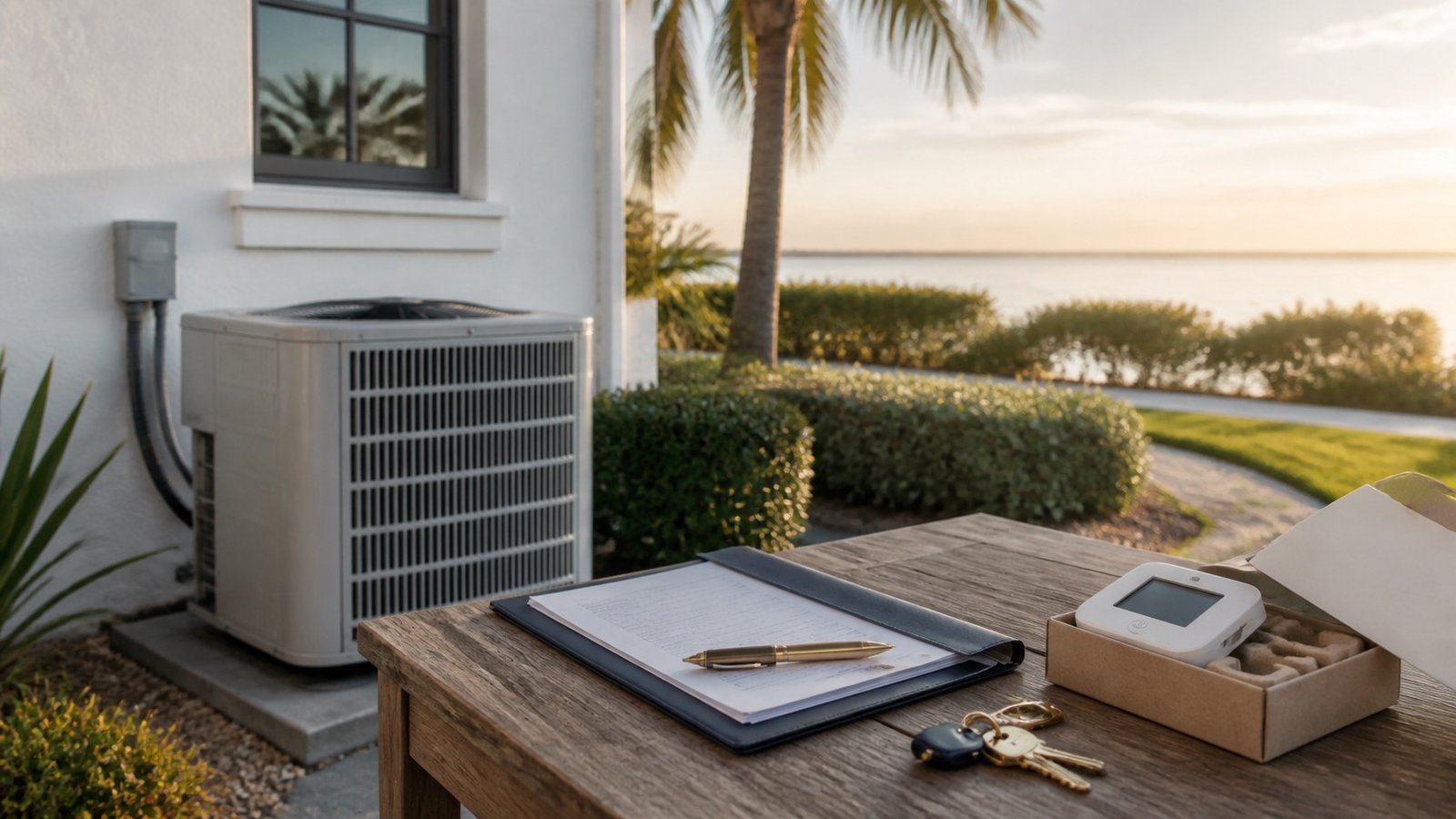
Which Melbourne-Area Sellers Should Service HVAC Before Listing Instead of Offering a Buyer Credit?
By Carrie Liotta, Space Coast REALTOR® with REAL Broker | Published August 13, 2026
Melbourne-area sellers should service the HVAC before listing when the system is working, the concern is uncertainty, and a clean service record can help buyers and insurance agents feel more comfortable. A buyer credit is usually better when the system is failing, near replacement, missing major documentation, or when the buyer will reasonably want to choose the contractor or equipment after closing.
My practical answer is this: if a licensed HVAC technician can inspect, clean, repair a small issue, and document that the system is operating properly, do that before the home goes live. Do not use a vague future credit as a substitute for basic maintenance. But if the system has a serious defect, is very old, or is likely to dominate the four-point or insurance conversation, then we need to decide whether replacement, a price adjustment, or a carefully structured credit is the stronger strategy.
Why HVAC questions matter in Melbourne-area listings
In Melbourne, West Melbourne, Eau Gallie, Lake Washington, Suntree, Palm Shores, beachside Melbourne, and nearby Rockledge, buyers pay close attention to AC. They know Florida comfort depends on it. They also know an older or poorly documented HVAC system can affect inspection negotiations, insurance comfort, and the first few years of ownership.
HVAC is also one of the four systems reviewed in a Florida four-point inspection, along with roof, electrical, and plumbing. The Florida Department of Financial Services explains the basics in its four-point inspection guide. For a seller, that means the AC is not just a comfort feature. It can influence whether buyers feel the home is easy to insure and close.
This is why I do not like waiting until the buyer’s inspection to learn what the system needs. A small service issue is easier to handle before listing than during a stressed negotiation with deadlines, lender questions, and a buyer wondering what else has been deferred.
When servicing the HVAC before listing is the right move
Service before listing when the system is functional but not recently documented. If the AC cools normally, is not ancient, and has no known major defect, a professional service appointment can give the seller a cleaner story. The technician can change or check filters, clear drain lines, inspect coils, check refrigerant concerns, verify operation, and identify small repairs before buyers see the home.
That service record can be especially helpful if the system is older but still performing. Buyers are more comfortable with “2015 system, serviced last month, no active defects noted, records available” than “AC works fine, we think.” The first statement gives them something to evaluate. The second invites doubt.
Service also makes sense when the home has other strong features and the seller does not want HVAC uncertainty to distract from them. A Melbourne home with a newer roof, impact windows, updated electrical, and a well-maintained older AC may still sell beautifully if the paperwork is organized. Without records, buyers may focus on replacement fear instead of the full property value.
When a buyer credit may be the better strategy
A buyer credit may be better when the system is near the end of its useful life, the repair cost is high, or the buyer will want control over the replacement. If the AC is actively failing, cooling unevenly, leaking, short-cycling, or repeatedly needing service, a basic tune-up will not solve the real issue. In that case, a credit, price adjustment, or pre-listing replacement discussion is more honest.
Credits also need to work inside the contract, lender rules, appraisal, buyer closing-cost limits, and insurance timing. A seller cannot simply promise “we will give a credit” and assume that solves every problem. If the buyer needs the HVAC issue repaired for insurance or lending comfort before closing, a credit after closing may not be enough.
This is the same logic I use in what Space Coast sellers should document before listing a home with a newer roof but older HVAC. The strategy has to match the actual risk, not just the seller’s preferred answer.
What HVAC records should sellers gather?
Before listing, I want sellers to build a simple HVAC file. It should include:
- Installation invoice, if available.
- Permit record, if available through the county or city.
- Model and serial numbers for condenser and air handler.
- Maintenance records and recent service invoice.
- Warranty information and transfer details.
- Receipts for major parts, repairs, thermostat replacement, or ductwork.
- Any four-point inspection that comments on HVAC.
- Recent utility bills, if the seller wants to support efficiency claims.
The Brevard County building permit search can help for county permit records, although properties inside Melbourne, West Melbourne, Palm Bay, or other municipalities may have city records instead. Older records may not be perfect, but it is still worth confirming what you can.
Do smart thermostats help the seller’s story?
They can, but only as supporting evidence. ENERGY STAR describes smart thermostats as Wi-Fi-enabled devices that can adjust heating and cooling settings, support schedules, and provide usage insights. That can be a nice buyer-facing feature, especially for remote workers, frequent travelers, and owners who like monitoring comfort.
But a smart thermostat does not make an old system new. It does not fix ducts, poor maintenance, dirty coils, drainage problems, or uneven cooling. If you are a seller, use the smart thermostat as part of the comfort story, not as the whole story. Buyers will still care about the system age, service records, and whether the house cools evenly.
The U.S. Department of Energy’s air-conditioning guidance emphasizes proper sizing, maintenance, and efficient operation. That is a useful reminder for sellers: the system’s performance matters more than the gadget on the wall.
Melbourne-area examples where I would service first
I would service first in an established West Melbourne home where the AC is eight to twelve years old, the roof is newer, the system cools well, and the seller simply has not had a recent tune-up. I would also service first in a Suntree or Lake Washington home where the seller has strong maintenance history but the last invoice is more than a year old. In those situations, a service appointment can reassure buyers without creating a bigger negotiation.
I would service first in a beachside or Palm Shores home if the system is newer but exposed to salt air and the seller wants to show responsible care. Buyers near the river or beach often expect more maintenance awareness. A clean service record helps.
I would also service first when the listing will compete against newer homes. A well-kept older Melbourne home can still win against a newer subdivision if the seller’s records show that the big systems have not been ignored.
Examples where I would discuss credit, replacement, or pricing instead
I would not rely on a tune-up if the system is failing, leaking, producing weak airflow, or unable to cool the home properly. I would not rely on service alone if an HVAC professional says replacement is needed soon and the buyer pool is likely to be financing-sensitive. And I would not pretend a very old undocumented system is equal to a newer one just because it turns on during the showing.
In those cases, we need a bigger strategy. Sometimes replacement before listing is the cleanest path. Sometimes the best answer is pricing the home with the AC age in mind. Sometimes a buyer credit works, but only if it fits the contract and lender. The right move depends on the home’s price point, buyer profile, system condition, and what competing homes offer.
If you want the buyer-side view, read what Brevard County buyers know about HVAC age before making an offer. That is the lens buyers will bring to your listing.
What about ductwork?
Ductwork is the hidden piece many sellers forget. A newer HVAC system can still disappoint buyers if the ducts are old, damaged, poorly sealed, or uneven. I wrote specifically about this in whether Melbourne sellers should replace aging ductwork before listing if the HVAC is newer. For some homes, documenting duct condition is just as important as documenting the condenser age.
If your home has had duct repairs, insulation work, air balancing, or major service, keep those invoices in the same file. A buyer may not understand every technical detail, but they will understand that the seller maintained the system thoughtfully.
“Crucially, she was an absolute rock when it came to managing the multiple hurdles with various offers. She kept us informed every step of the way, worked hard to resolve issues with buyers, and her patience with everyone involved was remarkable.”
A recent seller client
My seller recommendation
If the HVAC is working and the main problem is lack of recent documentation, service it before listing. Get the invoice. Save the report. Make sure the thermostat works. Replace the filter. Clear the easy questions before buyers arrive.
If the HVAC has a known serious issue, do not hide behind a small service call. Price, repair, replace, or credit with a clear strategy. Buyers can handle honest condition when the listing is positioned correctly. What they dislike is discovering during inspection that the seller knew the AC was a problem and hoped the buyer would accept a vague credit later.
Bottom line
Melbourne-area sellers should service HVAC before listing when service can document a working system and reduce buyer uncertainty. A buyer credit makes more sense when the system needs more than maintenance or when replacement choice, contract terms, and lender rules point that direction.
If you are preparing to sell in Melbourne, West Melbourne, Eau Gallie, Lake Washington, Suntree, Palm Shores, Rockledge, or beachside Brevard, reach out for a no-pressure conversation about selling with REAL Broker. I can help you decide whether to service, document, credit, replace, or price around the HVAC before the first showing. Your next chapter starts here.