
What Should Sellers Near the Indian River Lagoon Prepare Before Listing if Flood Insurance Questions Come Up?
By Carrie Liotta, Space Coast REALTOR® with REAL Broker | Published August 13, 2026
If you are selling a home near the Indian River Lagoon, do not wait for the buyer’s insurance agent to frame the flood conversation for you. Prepare the flood, insurance, elevation, drainage, permit, and repair documents before the home goes live. A river-near location can be one of the most beautiful selling points in Brevard County, but buyers need to understand the carrying cost and risk clearly before they feel confident moving forward.
My direct answer is this: sellers should gather the current flood-zone information, any elevation certificate, available insurance history, permits for major improvements, drainage or water-intrusion repair records, roof and system documentation, and a simple explanation of what living near the lagoon actually means. You are not trying to talk buyers out of doing due diligence. You are making sure the home is not treated like a mystery.
Why flood insurance questions come up so quickly near the lagoon
The Indian River Lagoon is part of the Space Coast’s identity. It gives buyers sunrise views, wildlife, boating culture, launch-view moments, kayak access, and a softer waterfront feel than the Atlantic. But the same setting that makes a home emotionally appealing can also trigger practical buyer questions about flood zones, storm surge, drainage, elevation, wind exposure, and insurance cost.
FEMA explains that flood insurance is separate from standard homeowners coverage on its official flood insurance page. That matters because many buyers assume homeowners insurance covers more than it does. If a buyer is relocating from outside Florida, they may not understand the difference between wind, flood, homeowners, and lender-required coverage. If they are local, they may still be sensitive to monthly payment and insurance changes.
As a seller, the goal is not to guarantee what a buyer’s premium will be. You cannot do that. The goal is to reduce uncertainty so buyers can get accurate quotes quickly and make a clean decision during the inspection period.
Start with the exact flood-zone story
Do not rely on phrases like “near the river,” “high and dry,” or “never flooded” as the whole story. Buyers and lenders will look at the actual parcel. FEMA’s Flood Map Service Center is the official public starting point for flood hazard map information, and the buyer’s lender and insurance agent will use property-specific details.
Before listing, I like sellers to know whether the property appears to be in a special flood hazard area, whether the seller has an elevation certificate, whether flood insurance is currently carried, and whether the current policy is transferable or useful for quoting. Even if the policy itself does not transfer neatly, the information can help buyers understand what questions to ask.
Be careful with overpromising. If a seller says “flood insurance is cheap” based on their own long-held policy, the buyer may still get a different quote because ownership, coverage, elevation, underwriting, lender requirements, and policy structure can change. Keep the conversation factual: here is the current information, here are the documents, and the buyer should verify with their own insurance professional.
What documents should a lagoon-area seller gather?
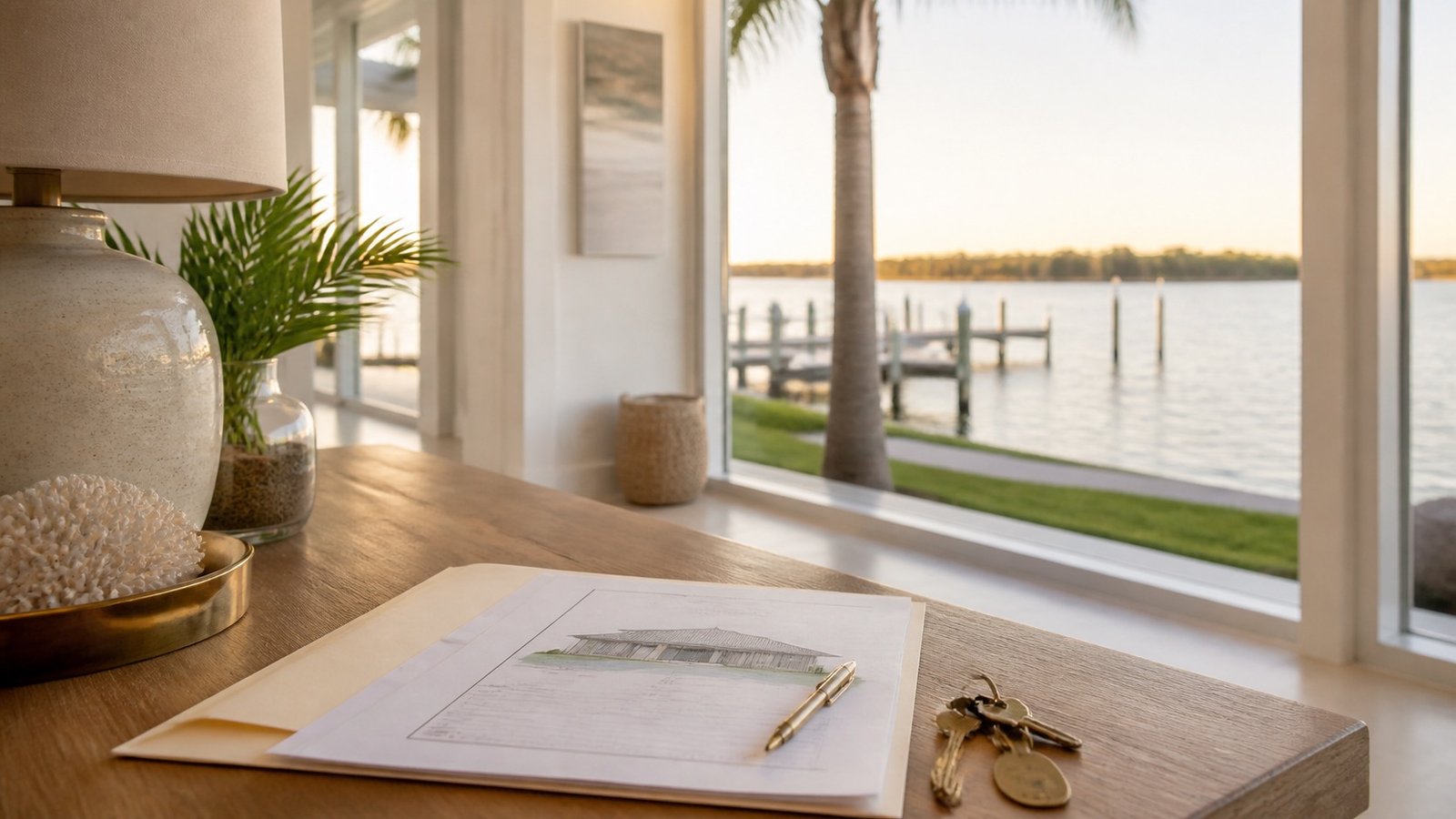
I would build a simple digital folder before photography. The folder should not be a sales pitch. It should be a clean property file that supports the listing.
- Current flood insurance declarations page, if the seller has one.
- Elevation certificate, if available.
- Any flood-proofing, drainage, grading, seawall, dock, shoreline, or water-intrusion repair records.
- Roof permit, roof invoice, wind mitigation report, and four-point inspection if available.
- Permits for major improvements, additions, remodels, windows, doors, docks, seawalls, or drainage work.
- Seller disclosure notes about prior water intrusion, claims, drainage issues, or repairs.
- Utility, maintenance, and service records that show responsible ownership.
The Brevard County building permit search can help sellers start the permit-history review for county records. Homes inside municipalities may have records with the city, and older records may not be complete, so I treat permit research as a starting point rather than a perfect archive.
Should a seller order an elevation certificate before listing?
Sometimes. If the home is clearly going to raise flood-insurance questions and there is no elevation certificate available, ordering one before listing may help. It can give buyers and insurance agents better information and reduce the chance that everyone scrambles during the contract period.
It is not automatically necessary for every river-near home. The decision depends on the flood zone, age of the home, lender expectations, likely buyer profile, current insurance file, and whether missing information is likely to slow the sale. If the home is in a location where buyers will ask about flood insurance immediately, I would rather solve that information gap early than let it become a negotiation surprise.
This is the same philosophy I use with older roofs or HVAC systems: documentation does not make every concern disappear, but it keeps buyers from filling in the blanks with fear. That is why the approved benchmark post about selling a Viera or Suntree home with an older roof or HVAC starts with paperwork. The lagoon version is no different.
How to market the lagoon lifestyle honestly
Do not hide the lifestyle. The lagoon is a major selling point. Buyers want to know about sunrise coffee, kayak mornings, dolphin and manatee sightings, bird life, rocket launches, quiet water, and access to parks, marinas, causeways, and restaurants. The mistake is presenting the lifestyle while acting as if insurance, flood, and maintenance questions are rude interruptions.
A confident listing can hold both truths: this is a beautiful Space Coast setting, and buyers should review the property-specific flood and insurance information. In my experience, serious buyers appreciate that honesty. It makes the seller look prepared instead of defensive.
If a buyer is still deciding whether the lagoon lifestyle fits, my guide to living near the Indian River Lagoon before choosing a Brevard County neighborhood gives the buyer-side lifestyle context. Sellers can use that same mindset when deciding which features to highlight.
Where these questions come up most often
I see flood-insurance questions near the lagoon in Merritt Island, Cocoa, Rockledge, Titusville, Melbourne, Palm Shores, Indian Harbour Beach, Satellite Beach, and other river-influenced pockets. The details vary. A canal-near Merritt Island home raises different questions than a river-view condo, a Rockledge river-near older home, or a Titusville launch-view property near US-1.
That is why sellers should avoid generic answers. “We are near the river” does not tell a buyer enough. “Here is the flood-zone information, here is the elevation certificate, here is the current insurance declaration, here is the roof permit, and here are the drainage repairs completed in 2023” is much more useful.
For buyers weighing waterfront appeal against insurance comfort, I recently wrote about choosing a home near a marina or prioritizing lower flood insurance risk and Merritt Island canal-front, river-near, and inland homes when insurance comfort matters. Those buyer questions are exactly the questions sellers should anticipate.
How flood questions affect negotiation
Flood questions usually affect negotiation in three ways: price confidence, timing, and contract risk. If a buyer cannot get a quote quickly, they may ask for more time. If the quote is higher than expected, they may ask for a price adjustment, credit, or repairs. If the buyer cannot get acceptable coverage for their loan, the deal may be at risk.
Sellers cannot control every quote, but they can control preparation. A complete document package helps the buyer’s insurance agent quote faster. It also helps the buyer understand whether the home has been cared for responsibly. That can protect seller leverage, especially when the property has a strong lifestyle feature buyers genuinely want.
What I do not recommend is arguing with buyers about whether flood insurance “should” matter. If it matters to the buyer, lender, or insurance carrier, it matters. The seller’s best response is not defensiveness. It is documentation, clear disclosures, and a pricing strategy that respects the home’s full ownership picture.
What to disclose and what not to guess
If there has been prior water intrusion, drainage repair, flood claim, shoreline work, dock repair, seawall work, or storm-related damage, discuss the facts with your real estate professional and complete the seller disclosure carefully. Do not guess at dates or causes. If you know a repair was made, provide the invoice, permit, photos, warranty, or contractor record when available.
Brevard County Emergency Management’s flood information resources remind residents to stay informed about flood risk and preparedness. Even when web portals are not perfect, the official county emergency-management and FEMA resources are the correct places to start. Sellers should think of flood preparation as part of responsible Florida homeownership, not as a stigma.
“From the start, her approach was impressive, leading to multiple offers in a down market. Crucially, she was an absolute rock when it came to managing the multiple hurdles with various offers. She kept us informed every step of the way.”
A recent seller client
My pre-listing checklist for river-near sellers
Before going live, I would complete this checklist:
- Confirm the current flood-zone information for the property.
- Find the elevation certificate or decide whether ordering one makes sense.
- Gather current flood and homeowners insurance documents that can help with quoting context.
- Pull permits and invoices for roof, windows, doors, drainage, dock, seawall, shoreline, or major system work.
- Document prior water intrusion or drainage repairs honestly.
- Prepare a clear list of lifestyle features: launch views, kayak access, river breezes, parks, causeways, marinas, and nearby services.
- Price with both lifestyle value and carrying-cost questions in mind.
Bottom line
A home near the Indian River Lagoon can be one of the most compelling listings in Brevard County, but the seller needs to be ready for flood-insurance questions. The strongest strategy is not to avoid the topic. It is to prepare the documents, explain the lifestyle honestly, and help buyers get accurate information quickly.
If you are thinking about selling a river-near home in Merritt Island, Rockledge, Cocoa, Titusville, Melbourne, Palm Shores, or beachside Brevard, reach out for a no-pressure conversation about selling with REAL Broker. I can help you organize the flood, insurance, permit, and lifestyle story before the first buyer walks through the door. Your next chapter starts here.