
Which Brevard County Homes Work Best for Buyers Who Want a Shaded Backyard and Strong Storm-Season Tree Maintenance Records?
By Carrie Liotta, Space Coast REALTOR® with REAL Broker | Published August 10, 2026
The best Brevard County homes for buyers who want shade and storm-season confidence are not always the homes with the biggest trees. They are the homes where the trees have room to grow, the canopy is not crowding the roof, the drainage works after heavy rain, and the seller can show a sensible maintenance history: arborist invoices, pruning records, permit notes when applicable, and documentation for any prior removals or storm repairs.
I love a shaded Florida backyard. In August, a mature oak or a line of palms can make a patio feel livable at 5 p.m. instead of punishing. But when buyers ask me whether a tree-filled yard is a benefit or a liability, my answer is usually, “It depends on the records and the site.” Shade is wonderful. Mystery shade is where buyers get nervous.
What kind of shaded yard should Brevard buyers look for?
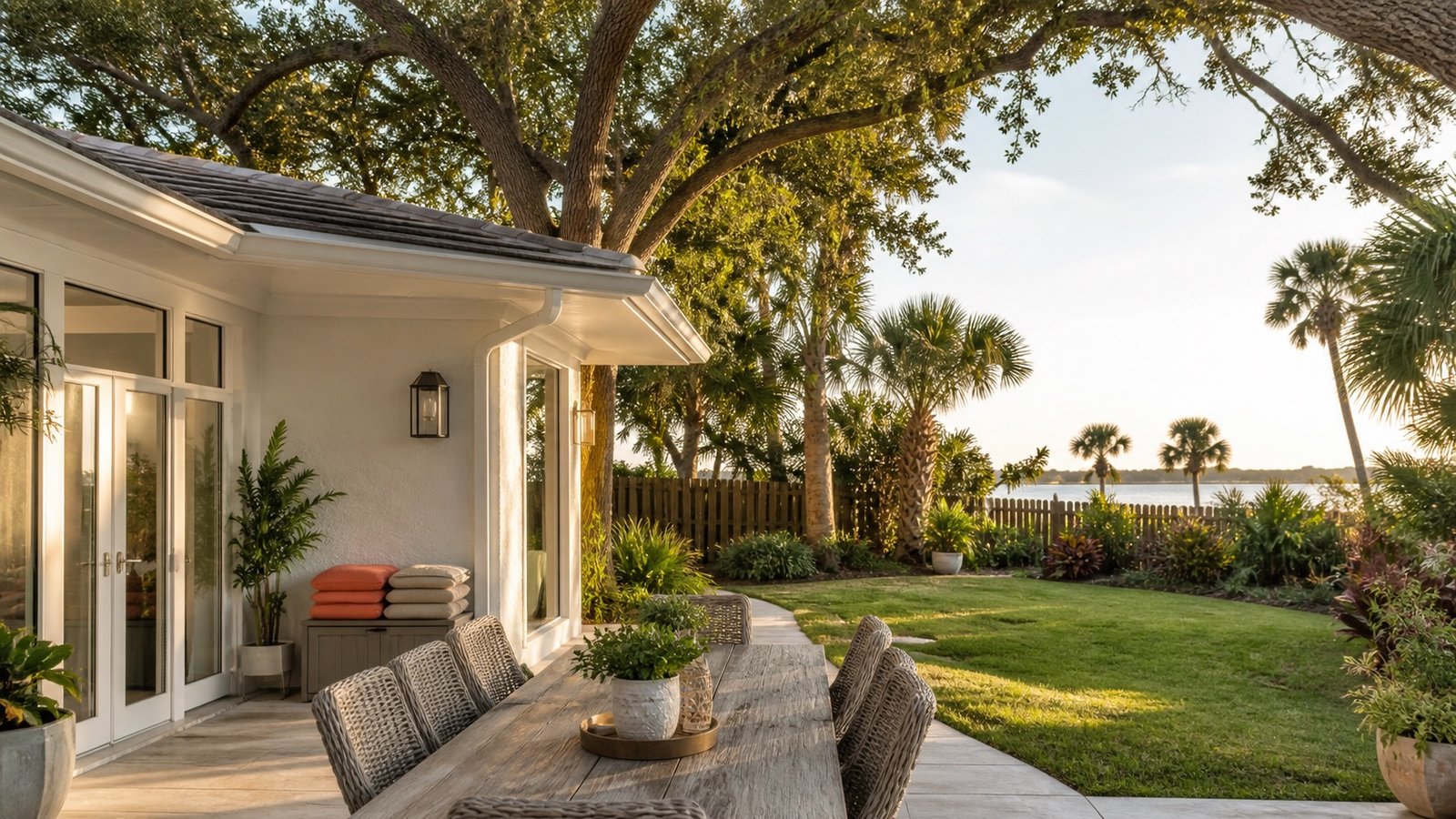
Look for healthy, well-spaced trees that frame the outdoor living area without leaning over the roof, pressing into the pool cage, lifting hardscape, or trapping water against the home. A shaded backyard should feel cooler and more private, but it should not feel like the house is sitting inside an unmanaged canopy.
In established parts of Rockledge, Merritt Island, Cocoa, Melbourne, Suntree, and older Palm Bay neighborhoods, mature trees can be part of the charm. They soften the street, create privacy, and make a home feel less like a bare new-construction lot. In beachside areas, palms and sea grapes can give a yard that coastal feel buyers picture before they move here. The right yard can be a lifestyle feature, especially if the patio, lanai, or pool area is usable in the late afternoon.
The difference is structure. UF/IFAS explains in its tree-training guidance that good pruning starts early, with attention to a dominant leader, properly spaced limbs, and avoiding large cuts later because large branch removal can invite decay. That matters for buyers because a tree that has been hacked back before listing is not the same as a tree that has been professionally maintained over time. You can read UF/IFAS guidance on pruning shade trees in landscapes for the technical background.
Why tree records matter before you make an offer
Tree maintenance records help a buyer understand whether the yard has been cared for or simply photographed well. I like to see invoices from a licensed tree service or certified arborist, notes about pruning dates, records of stump grinding or removals, and any professional assessment if a tree was considered risky. If the seller has before-and-after photos from storm cleanup, those can help too.
This is especially important in Brevard because storm season is not theoretical. A tree that drops a few leaves is one thing. A heavy limb over a bedroom, a decayed trunk near the driveway, or roots disturbing drainage near the foundation is a different conversation. UF/IFAS studied urban trees after multiple hurricanes and found that wind speed, rainfall, soil conditions, rooting space, species, age, and tree health all affect whether trees fail in storms. Their Wind and Trees: Lessons Learned from Hurricanes publication is one of the better plain-English resources for understanding why tree condition and site conditions belong in the homebuying conversation.
For buyers, the practical takeaway is not “avoid trees.” It is “understand the tree file.” A mature yard with records can be a strength. A mature yard with no records, visible decay, and branches brushing the roof may require more due diligence, more insurance questions, and a different offer strategy.
Which Brevard neighborhoods tend to fit this buyer?
If shade, character, and storm-season documentation are priorities, I would start by comparing established neighborhoods rather than only brand-new subdivisions. Parts of Rockledge, older Melbourne, Eau Gallie, Merritt Island, Cocoa, Palm Shores, Melbourne Village, Suntree, and Viera East can have the kind of mature canopy buyers are picturing. Some newer communities in Viera, West Melbourne, and Palm Bay have thoughtful landscaping too, but the shade may not be as established yet.
Rockledge is a good example. Buyers who want mature trees often like the feel of older streets, but they also need to evaluate roof age, limb clearance, and insurance documentation. I recently wrote about what Rockledge buyers should know about roof age, mature trees, and insurance, and that article pairs naturally with this question.
For Melbourne and Suntree buyers, shaded yards can be especially appealing if the home also has good access to Wickham Park, Pineda Causeway, shopping, schools, or medical care. In Palm Bay, shade can be valuable on larger non-HOA lots, but buyers need to look hard at drainage, irrigation, and whether trees are too close to structures, septic components, fences, or future pool plans.
What should you check during showings?
During the showing, I want buyers to slow down in the backyard. Do not just admire the shade from the slider. Walk the perimeter. Look up at branches over the roofline. Look down at the grade. Check whether gutters, downspouts, and swales appear to move water away from the home. Notice whether the pool cage, fence, shed, or screen enclosure is being crowded by limbs.
Then look for the quiet clues: fresh saw cuts, heavy mulch piled against trunks, mushrooms at the base, cavities, dead limbs, lifted pavers, cracked driveway sections near roots, standing water, or a slope toward the house. None of those automatically kill a deal, but they tell us what to ask next.
If the yard has obvious drainage history, read this alongside my guide to what sellers should document before listing a home with prior water intrusion or drainage repairs. Shade and drainage often overlap because mature landscaping can hide low spots, irrigation issues, or soil movement that buyers need to understand before closing.
What records should the seller have ready?
The strongest seller file is simple and factual. It should show who did the work, when it was completed, and why. A tree service invoice saying “removed dead limb over rear lanai and elevated canopy away from roofline” is more helpful than a vague comment that the trees were “trimmed last year.” If a certified arborist assessed a tree, keep that written assessment. If a tree was removed because it posed an unacceptable risk, keep the supporting documentation.
Florida law also gives homeowners a specific pathway for certain tree pruning, trimming, or removal on residential property. Florida Statute 163.045 says a local government may not require a notice, application, approval, permit, fee, or mitigation for pruning, trimming, or removal when the owner has documentation from an ISA-certified arborist or Florida licensed landscape architect that the tree poses an unacceptable risk to persons or property. The statute has limits, including mangrove protections, so it should not be treated as a blanket permission slip. Still, the official Florida tree pruning, trimming, and removal statute is important context for sellers and buyers.
For buyers, I am not asking for a perfect scrapbook. I am asking for enough documentation to tell the difference between ordinary yard care and deferred risk. A shaded backyard can become a negotiation point when records are thin, especially if an arborist, inspector, or insurance professional flags work that should be done soon.
How does this affect insurance and inspections?
Tree condition is not the same as a four-point inspection item, but it can still influence the risk conversation. If limbs are touching the roof, if heavy canopy limits roof visibility, or if prior storm damage is unclear, the home inspection and insurance quote process may bring it up quickly. Roof condition, drainage, and wind-mitigation documentation still matter more directly, but trees can complicate those categories.
This is where a shaded yard ties back to the larger storm-readiness picture. A home with a newer roof, documented shutters or impact windows, well-maintained trees, and positive drainage gives a buyer more confidence than a home where every storm-season detail is unknown. My guide to Brevard homes with low-maintenance landscaping and hurricane-ready features gives a broader checklist if you are comparing two similar homes.
When is a shady yard a red flag?
A shady yard becomes a red flag when the beauty is hiding work the buyer cannot comfortably take on. I get more cautious when large limbs overhang sleeping areas, older trees lean toward the home, roots are lifting the driveway or walkway, the seller cannot explain recent removals, or the yard holds water after heavy rain. I also pause when a seller has done dramatic last-minute pruning before listing, because that can make it harder to understand the tree’s normal condition.
For buyers on a tighter budget, this matters even more. If you are spending most of your cash on down payment and closing costs, you do not want a surprise tree removal, roof repair, fence repair, or drainage correction right after moving in. A beautiful backyard should support your lifestyle, not become the first major project you did not plan for.
“Carrie was an absolute gem! She helped me and my husband look for houses off and on for over two years. She is very professional, understanding, patient, and kind. We are first time home buyers and she advocated for our needs and explained things to us.”
A recent buyer client
My practical rule for shaded-backyard buyers
Choose shade that comes with breathing room, healthy structure, and records. A backyard does not need to be perfect. It does need to be understandable. If the trees are part of why you love the home, treat them like any other major feature: inspect them, ask for documentation, price the risk, and decide whether the maintenance fits your budget.
If you are comparing a shaded established home against a newer home with a bare yard, the right answer depends on your priorities. The established home may give you privacy, character, and cooler outdoor living from day one. The newer home may give you younger systems, cleaner insurance documentation, and less immediate tree maintenance. Neither answer is automatically better. The strongest choice is the one where the yard, roof, drainage, insurance file, and monthly payment all work together.
Bottom line
For Brevard County buyers, a shaded backyard can be a real quality-of-life win. I just want the shade to come with clarity. Look for healthy trees, sensible spacing, clean drainage, roof clearance, and maintenance records that show the yard has been managed before storm season, not cleaned up at the last minute for photos.
If you are shopping for homes in Rockledge, Melbourne, Merritt Island, Cocoa, Suntree, Palm Bay, or anywhere along the Space Coast, reach out for a no-pressure conversation about Brevard County homes for sale with REAL Broker. I can help you compare the pretty backyard with the practical file behind it. Your next chapter starts here.