
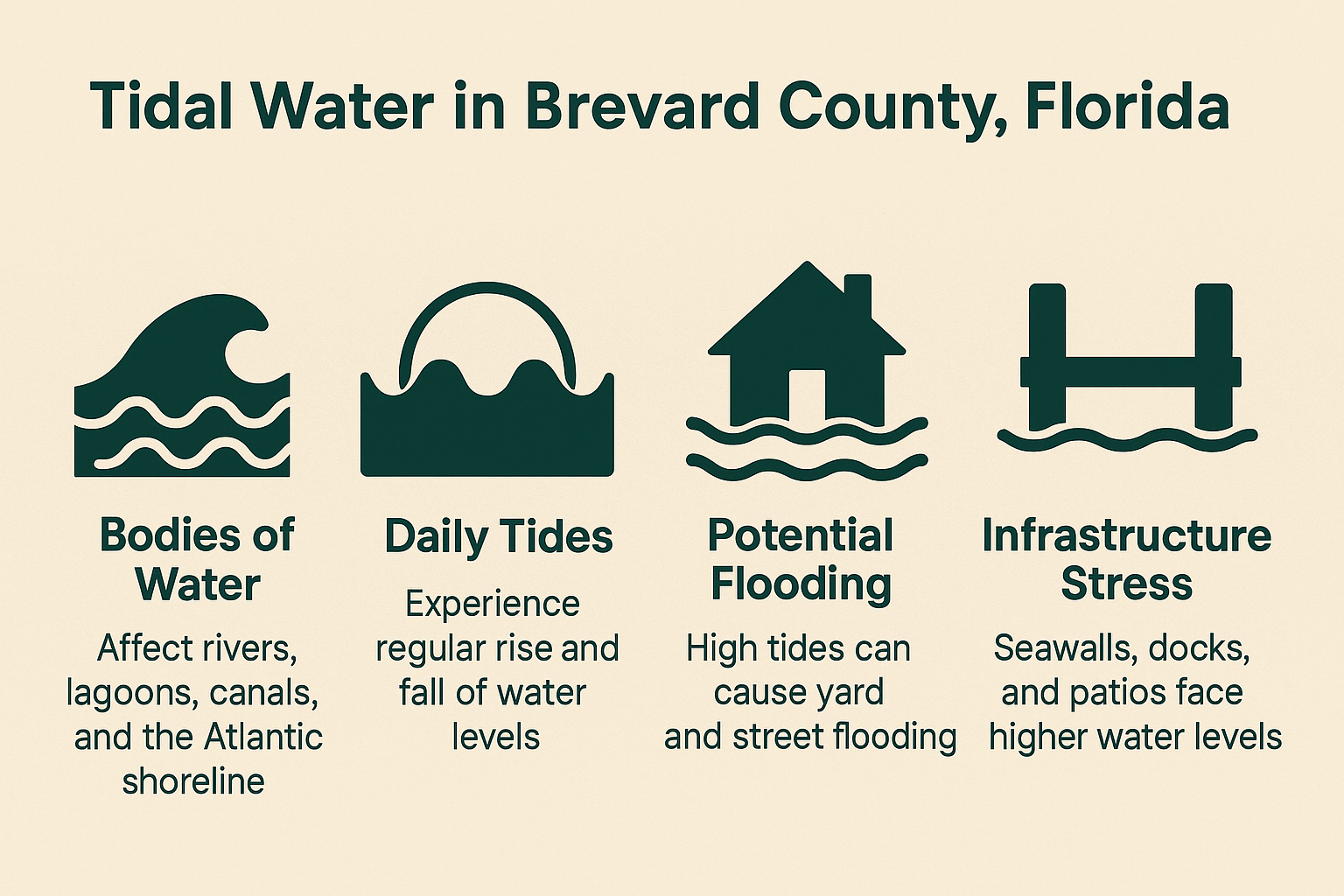
Living on the water in Merritt Island, Cocoa Beach, Satellite Beach, or anywhere along Florida’s Space Coast comes with incredible views and boating access — but it also means living on tidal water. Tidal water simply refers to any waterway influenced by the rise and fall of the Atlantic Ocean’s tides, and in Brevard County, that includes the Indian River Lagoon, Banana River (south of 528), Port Canaveral, Mosquito Lagoon, and most residential canals connected to those systems.
If you own or plan to buy a waterfront home, here are the top 5 things you must know about tidal water — and how it can affect your property, insurance, safety, and long-term costs.
1. Tidal Flooding & King Tides Can Affect Your Daily Life
Tides in Brevard County rise and fall twice a day, but certain times of year — especially fall and full-moon cycles — bring king tides, the highest tides of the year.
These events can cause:
- Street flooding in low-lying areas
- Driveways and yards underwater
- Saltwater entering garages or ground-level rooms
- Delays in garbage pickup, deliveries, or emergency access
Communities along South Tropical Trail, Sykes Creek, Cocoa Beach canals, and the Indian River Lagoon are especially vulnerable.
If your home sits low, tides will affect your routine — not just storm days.
2. Seawalls, Docks & Shorelines Wear Down Faster
Tidal water constantly pushes, pulls, and applies stress to your seawall, dock, pilings, and shoreline.
This can lead to:
- Cracks in seawalls
- Erosion behind the seawall
- Shifting pilings or weakened boat lifts
- Structural damage from strong currents or wave action
Because this is tidal water (state-owned submerged land), repairs usually require:
- DEP permits
- Army Corps review
- Possibly a submerged-land lease
Seawall replacement in Brevard County can run $1,200–$2,500 per linear foot, and dock repairs must meet strict environmental standards.
3. Flood Zones & Insurance Are More Expensive on Tidal Water
Most tidal-water neighborhoods fall into AE, VE, or Coastal A flood zones, which means:
- Higher flood insurance premiums
- Stricter building codes
- Mandatory elevation requirements for new construction
Older homes built below Base Flood Elevation can see costs skyrocket to:
- $5,000–$20,000+/year in flood insurance
- Higher windstorm insurance due to open water exposure
If you’re budgeting for waterfront living, insurance is one of the biggest financial factors.
4. Permits, Regulations & Submerged Land Rules Apply
If your home touches tidal water, you do not own the land under the water. The State of Florida does.
That means permits or approvals are usually required for:
- Dock replacement
- New or expanded boat lifts
- Riprap or shoreline stabilization
- Seawall work below the mean high-water line
You may also need a:
- Submerged land lease ($300–$800/year)
- Environmental review if manatees or seagrass beds are present
For new homeowners, these rules come as a surprise — and they add time and cost to every waterfront project.
5. Saltwater & Tidal Movement Increase Maintenance Costs
Saltwater is harsh, and tide-driven water movement makes it even more damaging.
Tidal homeowners deal with:
- Corrosion of metal components
- Rust on AC units, railings, and boat hardware
- Faster wear on docks and pilings
- Damage to landscaping due to saltwater intrusion
- Sand and debris buildup after king tides or storms
Waterfront living is beautiful, but maintenance is a non-stop part of the lifestyle.
Final Thoughts
Tidal water shapes almost every part of waterfront living in Brevard County — from your seawall and dock to insurance, permitting, and daily access. Whether you’re living on the Indian River Lagoon, the Banana River, Sykes Creek, or a Cocoa Beach canal, understanding these tidal effects helps you plan better, protect your investment, and enjoy waterfront life with confidence.
Q and A:
How do I know if my Merritt Island or Cocoa Beach home is on tidal water?
If your property connects to the Indian River Lagoon, Banana River, Mosquito Lagoon, Port Canaveral, or any Cocoa Beach/Merritt Island canal with boat access, it’s almost always tidal. You can confirm by checking local tide charts—if your water levels rise and fall twice a day, you’re on tidal water.
Does tidal water increase flood insurance costs in Brevard County?
Yes. Homes on tidal water frequently fall into FEMA AE or VE flood zones, which carry higher flood insurance premiums due to storm surge, king tide flooding, and tidal flow patterns. Older homes built below Base Flood Elevation may have significantly higher costs.
Are docks and seawalls regulated differently on tidal-water properties?
Absolutely. In tidal areas, the State of Florida owns the submerged land under the water. That means any dock, boat lift, seawall repair, or shoreline work often requires DEP approval, Army Corps permits, and sometimes a submerged-land lease. These rules protect waterways and can affect project timelines and costs.